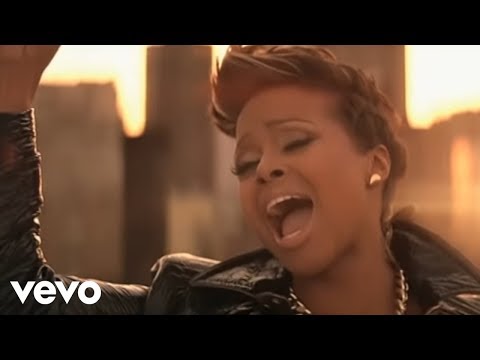
Maybe we don't have more talented female singers in mainstream markets these days because we never learned how to treat them? There was something
Maybe we don’t have more talented female singers in mainstream markets these days because we never learned how to treat them?
There was something about Chrisette Michele’s voice that could sit inside feelings Black women do not always know how to explain. Love that was complicated. Wanting someone you knew you should probably release. Trying to leave with dignity. Trying to stay without losing yourself. The difference between being loved and being chosen.
She could sing the sentence underneath the sentence.
And then, in January 2017, she sang at one of Donald Trump’s inaugural balls.
For many Black listeners, particularly those alarmed by Trump’s rhetoric and what his presidency might mean for Black people and women, her decision felt bigger than accepting a performance.
It felt like betrayal. The backlash was immediate.
But nearly a decade later, I find myself interested in a different question.
How long is a Black woman required to remain the worst decision she ever made?
Because something happened to Chrisette Michele that we do not always include when we tell this story.
Only months before the inauguration, she had been singing in Barack and Michelle Obama’s White House.
In August 2016, the Obama White House announced Michele as the featured musical entertainment for a state dinner honoring Singapore’s prime minister. The official program introduced her as a Grammy-winning artist who had sold millions of records and supported charitable organizations. Barack Obama had also included “If I Have My Way” on his summer playlist.
Michelle Obama had attended one of her performances before that.
Chrisette Michele was not publicly known as a Trump supporter.
Then came January 2017.
When Michele was offered the inauguration performance, she accepted.
She later explained that she believed she could be a kind of bridge. After a campaign in which many Black Americans felt attacked or disregarded, she said she wanted the people entering power to see the people they were talking about—to see “what we look like” and hear what they had to say.
You can believe that was naïve.
You can believe it was irresponsible.
You can believe she should have known better.
And still ask what happened next.
Because accountability and exile are not the same thing.
Director Spike Lee announced that he would no longer consider using her song “Black Girl Magic” in his television series She’s Gotta Have It. Questlove publicly offered to pay her not to perform. Michele said members of her extended family stopped speaking to her.
The consequences continued beyond social media outrage.
By 2019, The Washington Post reported that Michele had lost an album distribution deal and that radio stations had stopped playing her music.
And here is the part that complicates the story for me.
She apologized.
Months after the inauguration, Michele said she regretted the decision. She said she had believed bringing a message of hope into that moment could help. Then she admitted she had been wrong.
“That stage, that message on that stage was the wrong time and the wrong place,” she said.
And she apologized to the people she had hurt. But an apology does not necessarily restore a woman to the place she occupied before she disappointed us. Sometimes we accept the apology while permanently changing her name.
And that is where this stops being only a Chrisette Michele story for me.
Because years passed.
Other popular Black artists—men among them—made political choices that also angered parts of the Black community. Some associated themselves with Trump or Trump-related events. Some defended their choices. Some received enormous criticism.
I am deliberately less interested in naming them than in asking what happened afterward…..
Who gets to come back?
Who gets to make a terrible political judgment and eventually have it become something they did rather than the definition of who they are?
Who is permitted contradiction?
Who receives the luxury of time?
And who remains standing forever at the scene of her mistake?
Chrisette Michele has wondered about this herself.
Looking back years later, as male artists encountered their own criticism over Trump-related events, she questioned whether gender had mattered in what happened to her and whether being, in her words, “Black and soft” affected the way she responded to the punishment.
Her belief does not prove that sexism caused the difference. But it gives us a reason to investigate it.
Because Black women know something about the distance between being loved and being forgiven.
We can be adored for what we provide and still discover that belonging has conditions.
We can be expected to represent ourselves, our families, Black womanhood, our communities and sometimes an entire political morality in ways that other people are not.
So perhaps some listeners experienced her decision not simply as disagreement with a celebrity but as disappointment in someone whose voice had been allowed into very private rooms.
I understand that. I am not arguing that the criticism was unjustified. I am asking something more difficult.
Did we leave room for her to become more than it?
Because there is something troubling about a culture in which a woman can give us years of art, make one consequential decision, apologize for it—and still find that the decision has swallowed the art.
Especially if men are more readily permitted to disappoint us without disappearing.
That possibility deserves examination rather than assumption. But it also deserves examination rather than dismissal.
And perhaps that is the deeper story of Chrisette Michele.
Not whether she should have sung that night. We have argued about that for years. The question now is what happened after the song ended.
What did we decide she owed us?
What would she have had to do to finish paying the debt?
And was there ever going to be a moment when we considered it paid?
Because accountability without the possibility of restoration has another name.
It is banishment. And when we banish a woman whose voice once helped us understand ourselves, we should at least be willing to ask:
Who exactly are we punishing?
Maybe Chrisette Michele lost us.
But maybe, somewhere along the way, we lost Chrisette Michele too.
Survivor Affirmations
I am allowed to be more than the worst decision I have ever made.
I can take responsibility for what I did without surrendering my entire identity to it.
I do not have to remain frozen in the moment when someone became disappointed in me.
I am allowed to learn after the mistake, not just before it.
My growth still counts when it comes after consequences.
I can regret a choice without regretting myself.
I can apologize sincerely without spending the rest of my life auditioning for forgiveness.
I am allowed to ask whether the standards placed upon me are also placed upon others.
I do not have to become harder simply because softness has sometimes cost me.
My gentleness is not proof that I am weak.
I am allowed to disappoint people who once believed they knew exactly who I was.
I am a whole person, not a symbol required to behave perfectly so others can continue believing in me.
I release the impossible responsibility of representing every woman who looks like me.
I am allowed contradiction.
I am allowed evolution.
I am allowed context.
Other people may remember a version of me that I have already outgrown. I do not have to move back into it to make their memory comfortable.
Some people will never revise the story they tell about me. I can still revise the life I am living.
I will not spend years standing at the door of a community that has decided my remorse must never be enough.
I can honor the people my choices hurt without agreeing that hurting them made me unworthy of love.
I can understand why someone walked away and still grieve what their leaving cost me.
I can understand why I walked away from someone and still acknowledge what their absence cost me.
Forgiveness does not require pretending nothing happened.
The gifts I carried before I failed did not disappear because I failed.
What I created when I was loved still has value when I am misunderstood.
I will be careful about asking women to be flawless before I allow their gifts to nourish me.
I will notice when I have given men complexity while giving women verdicts.
I will notice when his mistake becomes a story and hers becomes a name.
I will notice who gets to come home.
And I will ask myself whether the door I expect to find open for me is a door I am willing to leave open for another woman.
I can hold disappointment and compassion in the same heart.
I can change what I consume, whom I support, and where I place my trust without needing another human being to disappear.
I do not have to destroy someone to establish that they hurt me.
I do not have to deny the harm to acknowledge the humanity.
I am learning the difference between boundaries and banishment.
I am learning the difference between consequences and condemnation.
I am learning that restoration does not always mean returning things to the way they were.
Sometimes restoration means allowing something new to exist after what was broken.
And when it is my turn to need that grace, I will remember:
I am still capable of creating something beautiful.
My worst moment does not get the final word.
I have the right to return to myself.