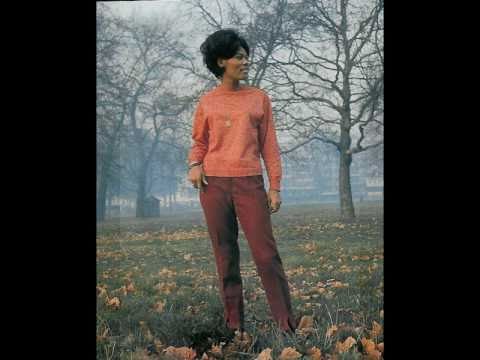
From Valley of the Dolls to Heartbreaker, the remarkable career of a woman who kept growing One of the things I find fascinating about Dionne Warwi
From Valley of the Dolls to Heartbreaker, the remarkable career of a woman who kept growing
One of the things I find fascinating about Dionne Warwick is how easy it is to know her music without realizing just how long she has been part of our lives.
I remember her from “Theme from Valley of the Dolls.” Then, years later, I began seeing her on television, and I didn’t immediately connect that woman with the singer from the earlier recording.
She seemed almost like a completely different woman.
Her voice had developed. Her musical style had expanded. Her presentation had changed. And there she was, still making music, still finding audiences, still very much Dionne Warwick.
It is a wonderful reminder that people are not frozen in the period when we first encounter them.
We keep living. We keep learning. And sometimes we become so much more than people remember.
The Voice Behind Valley of the Dolls
Dionne Warwick was born in East Orange, New Jersey, in 1940, into a family with deep gospel roots.
Before she became an international recording star, she sang with the Gospelaires, a group that included her sister Dee Dee and her aunt Cissy Houston.
Her remarkable partnership with songwriters Burt Bacharach and Hal David helped introduce the world to recordings such as “Walk On By,” “Anyone Who Had a Heart,” and “I Say a Little Prayer.”
Then came “Theme from Valley of the Dolls.”
The song was associated with the 1967 film and became a major hit for Warwick in 1968.
There was something distinctive about her voice during those years. Her phrasing was elegant, her delivery controlled, and her ability to express complicated emotions made even difficult melodies sound natural.
But that was only one period of her career.
The Woman Who Kept Finding New Music
By the late 1970s, Dionne had entered another successful chapter.
She worked with producer Barry Manilow on her 1979 album Dionne, which included “I’ll Never Love This Way Again” and “Déjà Vu.”
These recordings brought her renewed commercial success and Grammy recognition.
Then came the 1980s.
In 1982, she released “Heartbreaker,” written by the Bee Gees and produced by Barry Gibb.
And what a different musical atmosphere that was.
The arrangements reflected the sound of a new decade. Warwick’s voice had matured, and she was reaching listeners who may not have known much about her recordings from the 1960s.
This is what makes her career so interesting to me.
She did not need to spend the rest of her life trying to recreate “Valley of the Dolls.”
She could appreciate that accomplishment and still make something new.
Then Came That’s What Friends Are For
In 1985, Warwick joined Stevie Wonder, Gladys Knight, and Elton John to record “That’s What Friends Are For.”
The song became a major international success and helped raise money and awareness for AIDS research.
It also brought together artists from different musical backgrounds and generations.
By then, Dionne Warwick had already spent more than two decades making hit records.
Yet here she was, participating in another recording that would become part of millions of people’s memories.
And the song had a purpose beyond entertainment.
It encouraged people to think about friendship, loyalty, and showing up for one another during difficult times.
That is another kind of musical legacy.
She Wasn’t Finished Becoming
Dionne Warwick continued recording, performing, collaborating, and appearing on television long after many of her contemporaries had retired.
She also developed a public personality that younger audiences came to know through interviews, humor, and social media.
Some people discovered her through recordings made before they were born. Others encountered her as a television personality or through her amusing exchanges online.
And some of us had the pleasure of realizing that the woman we were watching was the same singer whose voice had been part of our lives for decades.
There is something delightful about that discovery.
Because we sometimes talk about older people as though their most interesting years must already be behind them.
We ask what they used to do. What they used to look like. What they used to accomplish.
But why should we assume their story is finished?
What Dionne Warwick Teaches Us About Reinvention
Not every chapter of life requires a dramatic transformation.
Sometimes reinvention means learning something new. Sometimes it means returning to an old interest with greater confidence. Sometimes it means changing careers, making new friends, developing a different style, or finally pursuing something you postponed for years.
And sometimes it simply means allowing yourself to grow without feeling obligated to remain the person everybody remembers.
That can be especially meaningful for women.
We are often encouraged to measure our lives against particular ages. By this age, you should have accomplished this. By that age, you should have settled into something else.
But a human life is not a checklist.
People develop at different times. Opportunities arrive unexpectedly. Our interests change. Our abilities grow in some areas while our priorities shift in others.
Dionne Warwick’s career offers a wonderful example of artistic longevity.
Her success in the 1960s did not prevent her from finding success in the 1970s. Her accomplishments in the 1970s did not close the door on the 1980s.
And those decades did not prevent her from continuing to connect with audiences later in life.
We should be careful not to treat reinvention as an obligation. There is nothing wrong with enjoying a quiet, settled life. Nobody has to keep achieving public milestones to remain interesting or valuable.
But for those who still have dreams, interests, and ideas they want to explore, Dionne’s story offers encouragement.
You do not have to remain the version of yourself that other people remember.
You are allowed to keep becoming.
Survivor Affirmation
I am allowed to grow beyond the person I used to be. My age does not cancel my curiosity, creativity, or ability to learn.
I can appreciate everything I have already lived while remaining open to experiences I have not yet imagined. I do not have to rush my next chapter, and I do not have to apologize for beginning one.
A Beautiful Thing About a Long Life
When I think about Dionne Warwick now, I think about how many different versions of her artistry we have been fortunate enough to witness.
The young singer with that unmistakable voice. The sophisticated performer of the 1970s. The woman singing “Heartbreaker.” The artist joining friends to raise awareness about AIDS. And the older woman whose humor and personality continue to introduce her to new audiences.
It is all one life.
And perhaps that is what makes her story so encouraging.
We sometimes imagine that becoming older means becoming less. Less interesting, less adventurous, less creative, less visible.
But growing older can also mean having more experiences to draw upon, more knowledge of ourselves, and a greater understanding of what we want from life.
Dionne Warwick reminds us that a woman can have a remarkable beginning without making it the only remarkable part of her story.
The woman you remember may have grown into someone you haven’t met yet. And that includes you.
Listen Across the Decades
- Theme from Valley of the Dolls (1967–68)
- I’ll Never Love This Way Again (1979)
- Heartbreaker (1982)
- That’s What Friends Are For (1985)
- Dionne Warwick’s biography at the New Jersey Hall of Fame