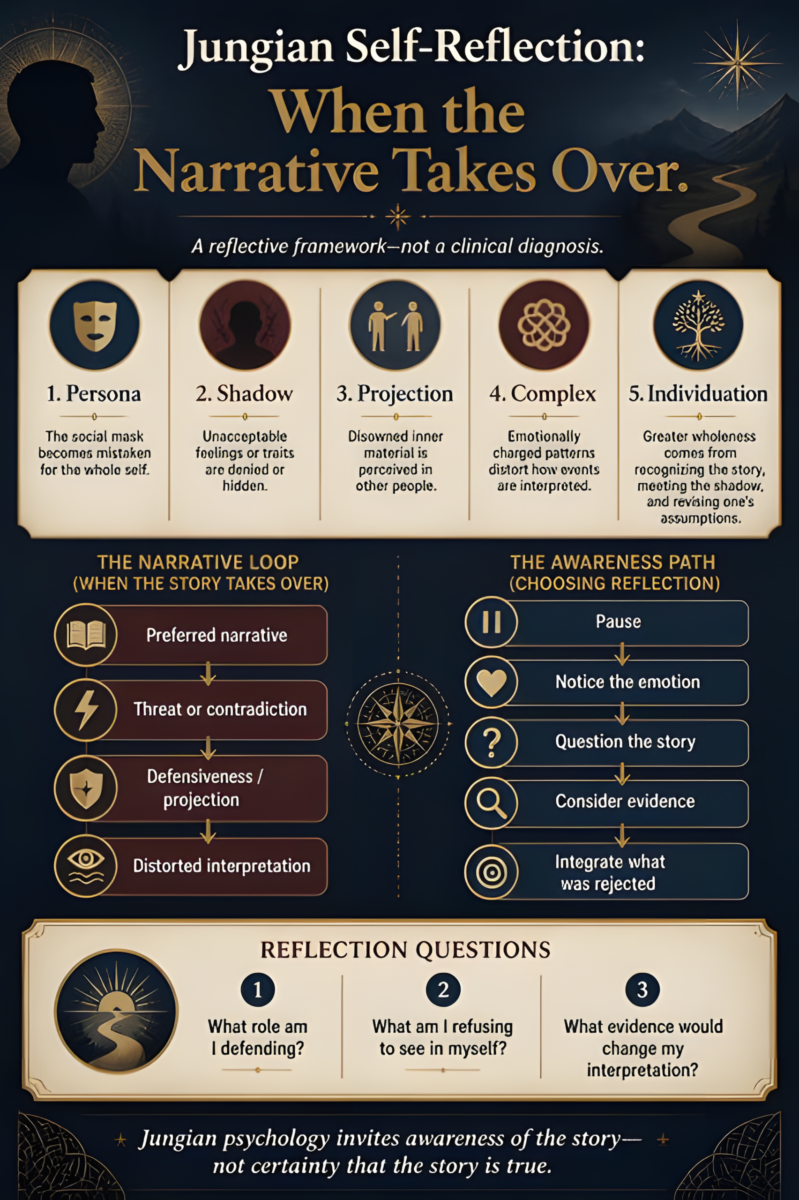
Exploring the parts of ourselves we learned to hide, the roles we learned to play, and the freedom to discover who we are today. Sometimes we becom
Exploring the parts of ourselves we learned to hide, the roles we learned to play, and the freedom to discover who we are today.
Sometimes we become so accustomed to being a certain kind of person that we forget we had other possibilities.
Maybe you became the responsible one because somebody had to be. You learned to read the room before speaking, recognize changes in someone’s mood, and keep your feelings to yourself when expressing them would only make things worse.
Perhaps you became the strong one. People admired how much you could handle, so they kept bringing you more. Eventually, being strong became less of a choice and more of an expectation.
And maybe there were parts of yourself that never had much opportunity to grow. Your playful side. Your curiosity. Your willingness to disagree. Your ability to rest without feeling guilty.
What happens when life changes, but the roles we learned to play remain?
This is one of the questions we can explore through Jungian self-reflection, an approach inspired by Swiss psychiatrist Carl Jung.
Jung believed that understanding ourselves involves exploring both the parts of our personalities we recognize and those that remain outside our awareness.
For Survivors, this can offer a gentle way to examine old patterns without turning every personality trait into a symptom or every decision into something that needs correcting.
You do not have to become a different person to begin discovering more of yourself.
1. 🪞 The Persona: The Person Everyone Knows
Jung used the word persona to describe the social face we present to the world.
We all have one. We behave differently at work than we do at home. We may speak differently with strangers than with close friends. These adjustments are ordinary parts of social life.
But sometimes a role becomes so familiar that we have difficulty stepping outside it.
Consider the woman everyone describes as dependable.
She remembers birthdays, handles emergencies, checks on relatives, and somehow manages to be available whenever somebody needs help.
She may genuinely enjoy caring for people. There is nothing wrong with that.
But what happens when she needs something?
Does she feel comfortable asking? Does anyone notice when she is exhausted? Can she disappoint someone without spending the rest of the evening feeling guilty?
Jungian self-reflection invites us to explore the difference between a role we enjoy and one we feel unable to leave.
A question to sit with:
Who am I when nobody needs me to be anything for them?
You might discover that you love being dependable. You might also discover that you would like to be cared for occasionally.
Both can be true.
2. 🌒 The Shadow: The Parts of Ourselves We Learned to Hide
One of Jung’s best-known ideas is the shadow.
The shadow refers to qualities, feelings, and tendencies we have difficulty recognizing or accepting in ourselves.
People sometimes misunderstand this concept as referring only to something dark or dangerous.
But the shadow can also contain perfectly ordinary human qualities that someone learned were unacceptable.
Imagine a girl who was repeatedly told that she talked too much.
She had opinions, questions, and stories. She liked making people laugh and challenging explanations that didn’t make sense. Over time, she became quieter. Years later, people describe her as reserved. She may even describe herself that way.
But somewhere in her memory is a little girl who loved the sound of her own voice.
Jungian reflection might invite her to consider whether her quietness is entirely a preference or partly something she learned.
Perhaps she enjoys silence. Perhaps she also misses speaking freely.
A question to sit with:
What qualities did I learn to hide because someone else found them inconvenient?
There is no requirement to recover an earlier version of yourself. People grow and change naturally.
The invitation is simply to consider whether you still have choices.
3. 🔥 Anger Is Not Always Something to Get Rid Of
Many Survivors have complicated relationships with anger.
Some learned that expressing anger could make an unsafe situation worse. Others grew up hearing that being angry was unattractive, disrespectful, selfish, or unkind.
For some people, anger became something to swallow.
Jungian self-reflection offers an opportunity to examine feelings we have been taught to reject.
Anger can sometimes tell us that we are frustrated, frightened, disappointed, mistreated, or experiencing a violation of our boundaries. It does not always mean we are right about a situation. And feeling angry does not give anyone permission to harm another person. But anger itself is a human emotion.
A woman who has spent years avoiding conflict may discover that she has difficulty recognizing when she is being treated unfairly.
She may have become so practiced at explaining other people’s behavior that she rarely stops to consider her own experience.
A question to sit with:
What was I taught about my right to be angry?
You are allowed to examine your anger without condemning yourself for having it.
You are also allowed to decide what to do with it.
4. 🎭 The Strong One: When a Compliment Becomes an Assignment
Being strong can be a beautiful quality.
Strength can help us protect ourselves, raise children, care for loved ones, build communities, and survive circumstances we never should have faced.
But sometimes people become attached to our strength because it makes their lives easier.
They assume we can manage another disappointment, another responsibility, another crisis.
And we may begin to believe that needing help would somehow contradict who we are.
A Survivor might look back and recognize that being capable was necessary during an earlier period of life.
Perhaps there was no dependable adult. Perhaps she had children to protect. Perhaps she needed to keep working while managing circumstances nobody around her understood.
Those abilities deserve respect.
Still, she may now have opportunities to live differently.
She can remain capable while accepting assistance. She can be courageous and still need reassurance.
A question to sit with:
Which responsibilities do I carry because I choose them, and which do I carry because people expect me to?
You do not have to surrender your strength to experience tenderness, rest, or companionship.
And you do not have to become softer to deserve care.
5. 👀 Projection: When Our Feelings Shape What We See
Jung also explored projection, the process of attributing something within ourselves to another person without recognizing its connection to our own inner life.
For example, someone who has never felt free to pursue personal ambitions might feel unusually irritated by people who openly pursue theirs.
Their irritation could be connected to an unacknowledged desire.
But projection is not an explanation for every uncomfortable reaction.
Sometimes we dislike someone’s behavior because that behavior is genuinely disrespectful, dishonest, or harmful.
Survivors, in particular, should not be encouraged to dismiss reasonable concerns about another person’s conduct simply because a psychological theory suggests looking inward.
Self-reflection should expand our understanding, not undermine our judgment.
A question to sit with:
Is my reaction connected to something happening now, something from my past, or perhaps both?
You can examine your feelings while continuing to trust observable facts.
6. 🌱 Individuation: Becoming More Fully Yourself
Jung called the lifelong process of developing a more integrated understanding of ourselves individuation.
The idea is not to eliminate every contradiction or become a perfectly balanced person.
It is to recognize more of our inner life and make room for qualities that may have been neglected.
For a Survivor, this could look surprisingly ordinary.
A woman who spent years managing other people’s emotions might discover that she enjoys painting.
Someone who always had to be serious might begin watching silly television shows again.
A person who learned to avoid disagreement might practice saying, “No, I don’t want to do that.”
Someone who spent years putting everybody else first might finally take the trip she has been dreaming about.
These experiences do not need to become grand declarations of transformation.
Sometimes they are simply pleasant moments in a life that now has more room for pleasure.
A question to sit with:
What would I like to explore if I didn’t have to explain my interest to anyone?
You are allowed to develop new interests without making them useful to anybody else.
7. 🌙 Dreams, Memories, and the Stories We Tell Ourselves
Jung believed that dreams and symbols could provide opportunities to explore unconscious thoughts and feelings.
He was interested in recurring images, familiar stories, and the emotional meanings people attached to them.
You do not have to believe dreams contain hidden messages to find this kind of reflection useful.
Sometimes a dream reminds us of a feeling. Sometimes an old photograph brings back a memory of who we were at a particular age.
And sometimes a song takes us straight back to a version of ourselves we haven’t thought about in years.
We can become curious about those experiences without assuming they contain a secret answer.
A question to sit with:
Are there memories, stories, songs, or images that remind me of parts of myself I would like to explore?
If an exercise brings up distressing memories, you can stop. You do not have to revisit painful experiences to prove that you are healing.
8. 💛 You Are More Than the Ways You Learned to Survive
There is a temptation in personal growth conversations to treat every survival habit as something that needs to be unlearned.
But some of those habits are also abilities.
Perhaps you became observant. Perhaps you developed patience, independence, resourcefulness, or an extraordinary ability to organize complicated situations.
You may value those qualities. You may want to keep them. The question is whether you have freedom in how you use them today.
Can you be observant without feeling responsible for monitoring everyone’s mood?
Can you be independent while allowing trustworthy people to support you?
Can you be generous without sacrificing your own needs?
There is no need to declare war on the person who helped you survive. She may have done remarkable things with very little support.
And she deserves the opportunity to discover what else she enjoys.
9. 📝 Seven Gentle Jungian Self-Reflection Prompts for Survivors
You can explore these questions in a journal, during a quiet walk, or while sitting with a warm drink. You do not need to answer all of them, and you never have to share your answers.
1. What part of my personality feels most natural to me?
Think about the moments when you feel comfortable in your own company.
2. What did I learn to keep hidden?
Perhaps it was your ambition, your sensitivity, your humor, your anger, or your need for privacy.
3. What role do people expect me to play?
Consider whether you enjoy that role and whether you feel free to step away from it.
4. What do I admire in other women?
Sometimes the qualities we appreciate in others can introduce us to possibilities we want to explore ourselves.
5. When do I feel pressured to explain myself?
Think about whether every explanation is necessary or whether some decisions can simply belong to you.
6. What brings me pleasure without requiring achievement?
Consider music, reading, gardening, laughter, dancing, cooking, art, or doing absolutely nothing.
7. What would I like to give myself permission to become?
You don’t need a complete answer. Curiosity is enough for today.
10. 🌷 A Gentle Reminder: Self-Reflection Is Not Self-Blame
Jungian psychology is one approach to understanding personality and inner experience. It has influenced psychotherapy, literature, and discussions about personal growth, although many of its concepts are difficult to establish through scientific testing.
It is not a substitute for trauma-informed mental health care, and it should never be used to suggest that Survivors unconsciously attracted or caused the harm they experienced.
You can reflect on your responses to difficult experiences without accepting responsibility for another person’s actions.
You can recognize patterns without turning your entire life into a project that needs fixing.
And you can decide that some questions are not useful to you.
Self-reflection should leave room for your dignity, your judgment, and your right to choose.
Original Quotes and Affirmations for Your Reflection
On survival and identity
“Some of the things I learned to do were necessary for the life I was living. I can appreciate how they helped me without assuming I must live that way forever.”
On the roles we carry
“I have been many things to many people. I am still entitled to discover who I am when the responsibilities are set aside.”
On anger
“My anger does not have to frighten me, and it does not have to govern me. I can listen to what I am feeling and decide how I want to respond.”
On rediscovering joy
“There are parts of me that have been waiting for a little more time, freedom, and attention. I would like to get to know them.”
On personal growth
“I do not owe anyone a completely reinvented version of myself. Growth can mean keeping what I love about who I am and making room for what comes next.”
On the woman who survived
“I will not look back at the woman I was and speak about her as though she failed me. She made decisions with the knowledge, choices, and support available to her.”
On becoming
“I am allowed to change my mind about what I enjoy, what I accept, and what I want for my future. I am also allowed to remain exactly as I am in the places where I feel at home.”
A Closing Thought: You Still Get to Know Yourself
There is something lovely about realizing that we can continue getting to know ourselves throughout our lives.
We may discover a talent at fifty that we never explored at fifteen. We may find ourselves laughing at things we once considered foolish. We may become more outspoken, more private, more adventurous, or more content with familiar routines.
Not every change has to be connected to something painful.
Not every interest has to become a lesson.
And not every quiet moment needs to be spent searching for something to repair.
Jungian self-reflection offers one way to ask who we are beneath the expectations, habits, and roles that have shaped our lives.
We can take what is useful from that invitation and leave the rest.
You have already lived through enough to know that life can ask a great deal of a person. May the years ahead also give you opportunities to discover what brings you happiness, what makes you curious, and what feels wonderfully, comfortably your own.
SurvivorAffirmations.com | Healing Requires Joy