There is an old lie that keeps getting dressed up as wisdom. It says Black communities do not get full representation because there are not enough “t
There is an old lie that keeps getting dressed up as wisdom.
It says Black communities do not get full representation because there are not enough “trained” people.
Not enough trained actors.
Not enough trained writers.
Not enough trained performers.
Not enough trained people who can “handle” the opportunity.
That lie needs to be retired.
Because we have already seen what happens when Black people are not merely judged from the outside, but developed, nurtured, trusted, and given the room.
We saw it with Motown.
Many Motown artists came from working-class and poor Black communities in Detroit and beyond. They were not born into formal conservatories, elite finishing schools, or industry pipelines built for them. They came out of churches, neighborhoods, talent shows, family rooms, streets, basements, and communities living under intentional American poverty.
What Motown did was not wait around for the world to declare those artists “ready.”
Motown developed them.
Berry Gordy built a system. Maxine Powell, who had run her own finishing and modeling school, was brought in to teach what she described as “personal development and growth.” She worked with artists on poise, presentation, grooming, and how to move through rooms where the world had already decided to underestimate them. She said she did not teach singing. She helped polish the human being carrying the gift.
That distinction matters.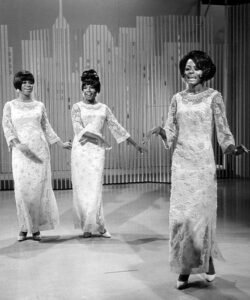
Motown did not prove that Black talent needed white approval. Motown proved that when Black talent is developed inside a serious system, it can transform the world.
Oprah has spoken about how powerful it was to see The Supremes on The Ed Sullivan Show as a child. One widely circulated quote from her is: “You saw the Supremes, the first time you had seen Black people on TV that were intelligent and beautiful and smart.
Black, intelligent, beautiful, and smart people existed everywhere, but they were not allowed on television. Representation is not only about “training.”
It is about access, development, visibility, and permission to be seen as fully human.
Motown did not wait for America to decide Black working-class youth were “ready.” Motown developed them. Polished them. Staged them. Protected the image. Built the package. Then put them in front of America anyway. And America couldn’t get enough. An empire that inspired many from the British music empire.
And ever since, people all over the world have built their act on the foundation that was built by young people from poor working-class families who simply needed an opportunity.
So when people say, “There are not enough trained people,” what they often mean is, “We do not want to build the development pipeline.”
That is not the same thing. The intention behind it is very different.
People are listening. They hear you.
That is why the “lack of training” narrative is so thin. Black performers, poor performers, disabled performers, little people, working-class performers, Southern performers, and visibly different people have always had talent. What they often lacked was not ability.
They lacked stages that were willing to risk centering them.
They lacked gatekeepers brave enough to say, “Put them on anyway.”
They lacked a society with the integrity to give credit where it was due.
And that brings me to Martin.
Because Martin did something people still do not talk about enough.
The show gave Black little people visible, funny, physical, memorable space inside a mainstream Black sitcom.
Not as a solemn lesson.
Not as a charity appeal.
Not as a sad little “very special episode” where everybody had to stop laughing and learn how to be decent.
They were in the joke.
They were in the fight.
They were in the room.
They were part of the comedy. They even delivered the last funny lines of the episodes.
In the Season 1 episode “Your Arms Are Too Short to Box with Martin,” Bushwick Bill guest-starred as Trey, with Tony Cox also appearing as Bennie.
And let’s sit with what that episode actually did.
Martin, Tommy, and Cole were the central male trio. They were the men the audience knew. The show could have easily treated the little people as background characters, sight gags, or a quick throwaway joke.
Instead, the episode centered them.
And then it let them win. All the way until the end.
That was not small.
Martin Lawrence made Black little people the physical victors in a comedy fight against the show’s three main male characters. The comedy was wild, exaggerated, and ridiculous because Martin was always wild, exaggerated, and ridiculous. A recipe for hilarious fun that everyone inside and outside of the culture was seated for. And inside that ridiculousness was opportunity.
They were not treated like they were too fragile to be funny.
They were not treated like they could only appear if the episode became a lecture.
They were not kept safely behind glass.
They got to be loud.
They got to be angry.
They got to be intimidating.
They got to be wrong.
They got to be funny.
They got to be the source of conflict.
They got to move the story.
That is representation, too.
Not perfect representation. Not gentle representation. But real comedic participation.
And one of the featured performers was not some unknown person plucked from nowhere. Bushwick Bill was already a member of the Geto Boys, one of the most significant rap groups in Southern hip hop. He had joined the group first as a dancer and later became one of its best-known members alongside Scarface and Willie D.
So again, the lie falls apart.
The talent was there.
The charisma was there.
The performance ability was there.
What was needed was the door.
And Martin opened one that had not been opened and hasn’t been opened since.
The show also brought little people back into its larger world, including Christmas/talent-show style appearances remembered by viewers. Some of those appearances are not cleanly documented in every online episode database, which says something by itself. The record often gets thin when the performers are outside the usual celebrity archive. But the memory among viewers remains clear: they were seen. They danced. They were part of the show’s world.
That matters.
Because sometimes modern representation becomes so cautious that disabled people, little people, elders, fat people, poor people, or visibly different people are only allowed to appear as lessons.
They become the episode’s moral assignment.
Nobody can joke around them.
Nobody can be messy around them.
Nobody can let them be funny, petty, angry, attractive, foolish, stylish, irritating, powerful, or wrong.
Everything becomes careful.
Everything becomes instructional.
Everything becomes a hallway monitor with a script.
But real life is not like that.
Black community life has always included all kinds of bodies, personalities, styles, abilities, limitations, gifts, and comic timing. The auntie who talks too loud. The cousin who can dance everyone under the table. The uncle who tells the same story every Thanksgiving. The neighbor who knows everybody’s business. The church lady with the sharpest side-eye in the room. The child everybody knows is special before the world has language for it. The elder who cannot move fast but can read a room before anybody else knows danger is coming.
Black life is not one body type.
Black humor is not one tone.
Black talent is not one resume.
Martin understood something about that.
The show’s world was built on an equal-opportunity roast culture. Martin got roasted. Pam got roasted. Cole got roasted. Tommy got roasted. Gina got roasted. Bruh-Man, Hustle Man, Jerome, Sheneneh, Mama Payne, Roscoe—everybody could be the joke and everybody could deliver the joke.
So when Black little people appeared, they were placed inside that same comic ecosystem.
There is a difference between being mocked because you are not considered human and being allowed into a comedy world where everybody catches it and everybody gives it.
That difference matters.
And Martin offered more than jokes. It offered opportunity.
The show helped anchor Martin Lawrence as a major comedic force, but it also gave Tisha Campbell and Tichina Arnold central visibility in a hit sitcom. The main cast included Martin Lawrence, Tisha Campbell, Carl Anthony Payne II, Thomas Mikal Ford, and Tichina Arnold, and the show ran for five seasons on Fox from 1992 to 1997.
For Tisha Campbell and Tichina Arnold, Martin gave them room to become household names in weekly Black television comedy. Gina and Pam were not background women standing beside the men. They had timing. They had attitude. They had style. They had story. They could be glamorous one minute and clownish the next. They could carry scenes.
That is what opportunity does.
It reveals capacity.
It does not create worth. The worth is already there.
But opportunity gives the worth a stage.
So when industries say, “We could not find enough trained Black performers,” “We could not find disabled actors,” “We could not find Black women writers,” “We could not find little people who could carry comedy,” “We could not find working-class talent,” we should hear the old trick in the new suit.
Because plenty of people at the top did not arrive fully formed either.
They were trained after somebody believed in them.
They were coached after somebody invested in them.
They were protected while they learned.
They were given second chances.
They were allowed to fail without being made into proof that their whole group was unqualified.
Black people rarely get that luxury.
Black women rarely get that luxury.
Disabled Black performers rarely get that luxury.
Poor and working-class Black artists rarely get that luxury.
One person stumbles, and suddenly the whole community is “not ready.”
Meanwhile, whole industries have been built on developing people who were not ready but were chosen anyway.
That is why the “not enough trained people” argument is so anciently dishonest.
Training is not magic.
Training is access plus repetition plus mentorship plus correction plus room to grow.
If you can build that for some people, you can build it for others.
Motown did.
Martin did, in its own comedy-world way.
And the lesson is still sitting there, waiting for people to stop pretending they cannot see it.
Black talent has never been scarce.
Opportunity has been hoarded.
Representation does not fail because people lack brilliance.
Representation fails when gatekeepers refuse to build doors, refuse to open rooms, and then blame the people left outside for not already having keys.
The truth is plain:
People who are given opportunities to be represented can do well.
They can be funny.
They can be trained.
They can be developed.
They can become beloved.
They can carry scenes.
They can change culture.
They can become the reason people remember the episode decades later.
And sometimes, if the room is brave enough, they can even beat up the main characters and walk away with one of the funniest episodes of the whole series.
That is not an accident.
That is what happens when opportunity tells the truth before the industry does.
*You never have to repeat this talking point, this false narrative, as if it were the truth. History tells the truth and is right there for everyone to learn.


@its.safaura I’m so tired of this timeline #blacklivesmatter #melanin #justiceforcyrus