Notice how people speak about sacrifices made for art vs. how they speak about sacrifices made for their favorite football or basketball player.....
Notice how people speak about sacrifices made for art vs. how they speak about sacrifices made for their favorite football or basketball player…..
When people talk about Prince’s body—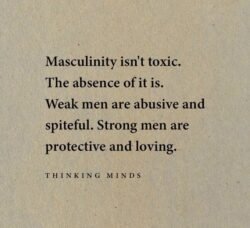
the injuries, the surgeries, the pain—they rarely say what they’re really saying.
They frame it as concern.
As hindsight.
As “if only.”
But beneath it is something older and sharper.
They are questioning his maleness.
Not openly.
Not honestly.
But persistently.
Because if Prince had used his body differently—
if he had sacrificed it on a football field,
or bruised it in hockey rinks,
or broken it down for a sport already sanctioned as “masculine”—
No one would be asking if it was worth it.
They would call him disciplined.
They would call him tough.
They would call it the cost of greatness.
But Prince was a dancer.
And that changed everything.
Dance Exposes the Double Standard
Dance requires strength, stamina, precision, endurance, and pain tolerance.
It demands training that is relentless.
It reshapes muscle, bone, balance, and breath.
It is athleticism.
But because dance is expressive, sensual, embodied—
because it refuses the blunt language of domination—
it is treated as suspect when practiced by men.
Especially Black men.
Especially men who refuse to blunt themselves to be palatable.
So when Prince’s body bore the marks of devotion,
people didn’t read it as occupational risk.
They read it as a flaw.
A choice too soft.
Too vain.
Too indulgent.
Not masculine enough.
This Is About Permission
We allow certain bodies to be spent.
We give permission for boys, little ones, to be injured in the name of:
-
competition
-
aggression
-
conquest
-
legacy
We do not give that same permission for:
-
beauty
-
artistry
-
sensual intelligence
-
emotional truth
When men choose the latter, their masculinity is quietly put on trial.
Prince stood in that tension unapologetically.
He did not apologize for the way he moved.
He did not harden his art to soothe anyone’s comfort.
He did not make his body smaller to earn approval.
And for that, his pain is reinterpreted as a mistake rather than a consequence of mastery.
Women Notice These Things
Because we have watched this play out again and again.
We know how bodies are policed.
We know how worth is assigned.
We know how deviation is punished with “concern.”
We know when someone is being asked:
Why didn’t you choose a more acceptable way to be yourself?
Prince didn’t fail his body.
He honored it.
He used it with intention, devotion, and genius.
What unsettles people is not the injury.
It’s the refusal to live inside the narrow permissions offered to him as a man.
Let’s Be Honest About the Discomfort
If Prince had broken himself for a sport,
they would have said:
“He gave everything for what he loved.”
Because he broke himself for ART,
they say:
“He should have known better.”
That tells us everything.
This was never about safety.
It was about who gets to decide which lives, which bodies, and which callings are worthy.
It is okay for people to speak exhaustively about how petite and short statured he was, but not about how that same physique gave him athletic advantages as an extraordinary dancer.
In any case, Prince decided for himself.
Prince didn’t fail his body.
He used it with intention.
And that kind of freedom has always made people uncomfortable.
Because let us note that after the devastation and warnings of CTE, football games go on as planned. With great enthusiasm and financial support. From little league on up. Even after the tragedy of Aaron Hernandez and his high school football teammates who themselves went on to commit violent offenses. (includes multiple murders and a police ambush)
So let this be the part we carry forward.
Do not let people who have never lived in your body decide what your devotion should look like.
Do not let borrowed fears talk you out of your own calling.
Do not let “concern” become a softer word for control.
Every true path asks something of the body, the spirit, the nerves.
There is no risk-free way to live honestly.
What matters is not whether the calling costs you.
What matters is whether it is yours.
Prince listened to the voice that told him who he was.
He answered it fully.
And whatever the cost, he did not live half-formed or apologetic.
That kind of life is not reckless.
It is intentional.
So heed the thing that keeps returning to you.
The craft.
The movement.
The work that makes your body feel awake and your spirit feel aligned.
Let others manage their discomfort.
Your task is simpler—and braver:
to live in truth,
to honor your gift,
and to spend your life on something that recognizes you back.
When Prince’s athleticism—his dancing, his physical devotion to art—is criticized as “dangerous,” “reckless,” or “self-inflicted,” what’s actually being questioned is:
Is this a worthy use of a body?
Even when the injury risks are equal or higher in sanctioned sports.
So no—this isn’t about concern.
It’s about whose pursuits are respected.