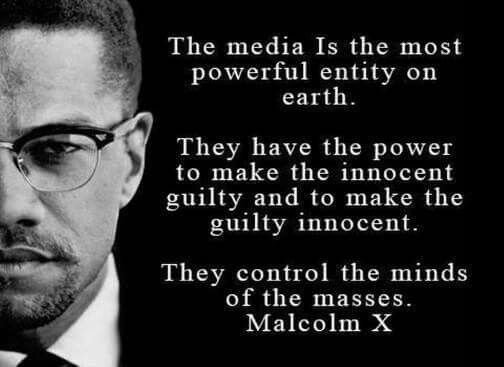
‘The question is not whether racism exists, but how it manifests.’ Ta-Nehisi Coates Can you make it past this phrase? I'm having a hard time doing so
‘The question is not whether racism exists, but how it manifests.’ Ta-Nehisi Coates
Can you make it past this phrase? I’m having a hard time doing so.
“Cambridge’s diversity poster boy.”
They called that Black man a boy. The disrespect was intentional. They meant that with all that’s left of their heart.
The world heard all about what the media dubbed the “Arday affair.” But not until after his tragic death did many of us learn that he was a husband, father, friend, and beloved and dependable colleague.
Diversity poster boy. That phrase appeared in a headline about Professor Jason Arday while allegations about his academic work were being publicly examined. And there were people calling it “delicious.” While people on social media were parsing through his hair and wondering whether his locks were “real.”
And now Jason Arday is dead at 41.
His family, grieving an unimaginable loss, has said that he endured a sustained campaign of misinformation, harassment, and abuse. His friends and colleagues have spoken about the enormous distress he experienced during the intense public scrutiny preceding his death. We should be careful here.
We all make mistakes, but some mistakes must be called out with immediacy and brawn; otherwise, they will just keep destroying the lives of others and taking great delight in doing it.
Respect for the grieving does not require silence about what happened in public. That is not a safe refuge for those who enjoyed harming this man.
In fact, respect demands that we learn something. Because something about the way Black people are treated when we stumble needs to change.
And it needs to change now.
‘Racism is a visceral experience… it dislodges brains, blocks airways, rips muscle, extracts organs, cracks bones, breaks teeth.’ Ta-Nehisi Coates
-
Black People Must Be Allowed Human-Sized Mistakes
Professor Arday faced serious questions.
There were allegations made. But none that involved physically harming another person. So it seems that it was an issue to be addressed by his employer and possibly others who had a financially vested interest in his career. That’s it.
Universities have procedures for investigating academic misconduct. Journals have procedures. Employers have procedures. Findings can be made. Work can be corrected. Degrees can be reviewed. Employment consequences can follow when and IF warranted. Accountability for these types of allegations does not require humiliation.
His life was intentionally turned into a spectacle. Somewhere along the way, Professor Arday’s case was intentionally turned into more than a dispute over footnotes, credentials, or academic standards. AND by some people who aren’t closely familiar with those things and haven’t been for a long time.
A mistake can require correction without requiring the destruction of the person who made it.
We desperately need to recover that distinction.
-
“Diversity Poster Boy” Told Us What This Story Had Become
Those three words should trouble us for a long time. Like a haint. “Diversity poster boy.”
Because suddenly Professor Arday wasn’t carrying only Jason Arday.
He was carrying diversity. He was carrying Black academics. He was carrying Cambridge’s racial progress. He was carrying arguments about merit.
He was carrying debates about DEI that scapegoat the people the gatekeepers kept locked out of opportunities. He was carrying every Black student who would walk through those doors after him. That is too heavy. And as some feared, it was too heavy.
This burden is painfully familiar. Black people have long understood the peculiar exhaustion of entering a room knowing that somebody may be treating your performance as information about your entire race.
Do exceptionally well, and perhaps somebody decides, See? They can do it.
Make a serious mistake, and somebody decides, See? This is what happens when standards are lowered.
Neither response sees the person.
A Black person’s excellence is not proof of Black people’s worth. A Black person’s failure is not proof against it. Even as an individual. Our humanity was never supposed to be on trial.
-
Black “Firsts” Should Not Have to Be Perfect
There is another cruelty buried here. Professor Arday was widely celebrated when he became Cambridge’s youngest Black professor.
Think about what we quietly ask of people who become “the first,” “the youngest Black,” “the first Black woman,” or “the only Black person.”
We celebrate them. We photograph them. Institutions put them in brochures. Their stories become “evidence” of progress. Progress for white people first and maybe the Black person because they are “exceptional,” not like the others.
And sometimes, without ever saying it aloud, we hand them an unbearable assignment:
Don’t mess this up. You gotta make your race look good, and the fact that we finally let in look like a success. We’re trying to prove that racism is finally over, at last.
Because when you are merely a professor, you can become a professor who failed at this part. When you are the Black professor who represents progress, failure becomes something much more dangerous. That isn’t equality.
Equality is being allowed to be brilliant without becoming a mascot.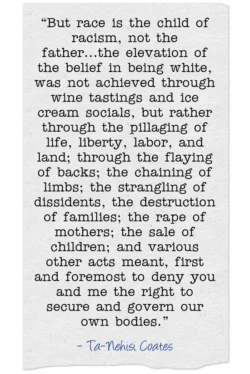
Equality is being allowed to disappoint people without becoming a cautionary tale about your race.
Equality is being allowed to screw something up and still wake up tomorrow with a path toward repair.
Black people should not have to earn the right to ordinary human mercy through extraordinary performance.
-
Accountability Is Not a Blank Check for Cruelty
This may be the lesson we most urgently need.
Because even one day later, some people are crowing about how he should not have done this or that. When someone is accused of wrongdoing, people sometimes behave as though everything done to that person afterward becomes morally permissible. No. Absolutely not.
Someone else’s wrongdoing does not erase our responsibility for our own behavior.
Accountability asks what you did. Humanity asks what we are permitted to do to you because of it.
Civilized societies and civilized citizens must be capable of asking both questions.
-
Black People Cannot Continue Carrying an Entire Race Everywhere We Go
There is an old burden here that many who are not Black are not intimately familiar with. But many Black people have heard most of these since childhood:
Behave yourself because people are watching.
Do twice as well.
Don’t embarrass us.
You may be the only Black person there.
Remember that people will judge all of us by what you do.
There were historical reasons our elders taught those lessons. They were trying to help children survive environments in which individual Black behavior really was generalized into racial judgment. And we still haven’t evolved as a society or outgrown the conditions that made those warnings necessary.
Instead, we keep reinventing them. Let Black people finally have the dignity of being one person at a time.
-
Institutions Cannot Celebrate Black Achievement and Disappear When the Weather Changes
There is another lesson universities, corporations, publishers, media organizations, and cultural institutions should hear.
We keep coming back to this lesson. For me, it was as recently as the 2026 BAFTA awards. When too few seemed to believe that Black people have feelings. Too.
Do not recruit Black people as evidence of your progress and then become confused about your responsibilities when controversy arrives.
Do not put somebody’s face on the brochure and leave them standing alone when the crowd gathers.
Institutional support does not mean suppressing legitimate investigations.
But it does mean establishing fair processes quickly.
- Communicating clearly.
- Separating substantiated findings from allegations.
- Providing appropriate pastoral and professional support.
- Protecting staff from harassment while investigations proceed.
- And refusing to let racialized attacks masquerade as concern for standards.
Cambridge itself initially described attacks on Arday as an attempt to tarnish his reputation, later opened investigations as new allegations emerged, and ultimately agreed to an independent inquiry into his appointment.
Those events deserve careful study. Not simply to decide who was right. But to improve how institutions respond the next time a human being becomes the center of a storm. Because there will be a next time. Unfortunately, we are not living in a non-racist world.
-
The Media Must Develop Ethics for the Age of the Pile-On
I do not reside in the UK but I definitely caught wind of the aggressive conversations happening online. I would have muted the conversations, but past history told a lot of us that this was going to come to some sort of terrible end. We are not new to this. I recall watching television the night that we lost Princess Diana. I knew why. That night, I blamed those newsy mags at the end caps of the grocery stores. Years before, I loved them, but they grew meaner in tone. Less information, more meanness for no reason.
Then, there was Meghan Markle. In an Oprah interview, Prince Harry referenced how he felt about the media, his mother’s death, and how that drove him to leave his home country with his wife and children.
The newsroom of 2026 does not operate in the media environment of 1996.
Every article is combustible. A headline becomes a screenshot. A screenshot becomes a post. A post becomes a thread. A thread becomes thousands of comments. Even if it doesn’t, people just buy the comments or likes anyway.
Commentators make videos. Strangers search archives.
Algorithms of social media companies have discovered that outrage keeps people watching and deliver more of it.
One newspaper may publish one article. But the person at the center can experience the accumulated force of the entire information ecosystem.
That must become part of modern journalistic ethics.
It is no longer enough to say:
We only published a story. The foreseeable ecosystem surrounding publication matters too.
We need ethical standards for proportionality, repetition, racialized framing, corrections, headline language, and reporting on individuals already experiencing mass public scrutiny. So evolving towards professional growth and maturity. .
-
We Need a Right to Come Back From Being Wrong
Something has gone terribly wrong with a culture in which every mistake threatens to become a permanent identity. We are HUMAN BEINGS. Even the people criticizing Professor Arday are not perfect. They too have things about their lives that they really hope no one finds out about. And everyone of a certain age knows it because we know that you don’t reach middle-aged years without making mistakes.
We are human beings. People must be allowed to repair. To correct. To apologize. To learn. To lose something without losing everything. To serve a professional consequence without receiving a lifetime sentence from strangers. To become wiser than the worst thing they have done.
Otherwise, accountability ceases to have a rehabilitative purpose. It becomes banishment.
And human beings cannot build humane societies around the principle that some people become disposable once enough of us are angry with them.
Justice without a road home eventually becomes vengeance. Pitchforks. Lit torches.
We need roads home.
Before We Move On
A man died. A family is grieving. Friends are grieving. Students and colleagues are grieving.
And a society now has an opportunity to decide whether we actually learn something about what happens when human beings become public targets.
Let the man come down from the poster. Let him be Jason. A human being.
A person who was loved. A person whose family knew dimensions of him that newspaper readers never could. And a person whose life was worth infinitely more than the controversy surrounding his name.
His friends and family deserve our deepest respect as they grieve. They should not be required to defend his humanity before being permitted to mourn him.
Meanwhile, the rest of us have work to do.
A human being is larger than the worst headline ever written about them.
My prayer today is that Jason Arday has joined the ancestors in a place unlike here. A place that does not deny him peace.
‘The luxuries of this world were built right on top of us.’ Ta-Nehisi Coates
Jason Arday: We Must Rage – Rage Against the Journalism of Cruelty – Byline Times
DEI is not dividing Britain. The weaponisation of race is – Voice Online
We Are Not Trespassing: Black Disability and the Right to Simply Live – WE Survive Abuse
The Dangerous Person Is Always the Most “Interesting” Person in the Room – WE Survive Abuse
10 Ways Violence Against Black People Is Dehumanized, Dismissed, and Minimized – WE Survive Abuse