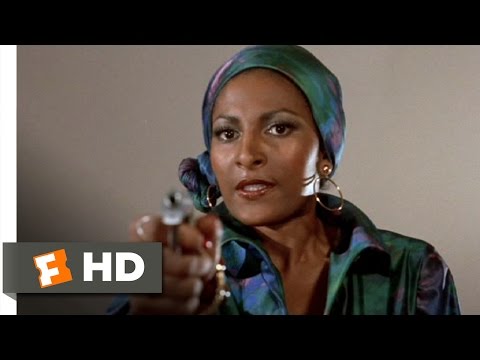
Before Hollywood celebrated women as action heroes, Pam Grier was already showing audiences what a woman could do when she refused to wait around for
Before Hollywood celebrated women as action heroes, Pam Grier was already showing audiences what a woman could do when she refused to wait around for somebody to rescue her.
And she did it as a Black woman in the 1970s.
Now, if you grew up watching Pam Grier, you already know. She wasn’t standing in the background looking worried while the men figured everything out.
She was the one figuring things out.
In Coffy (1973), she played a nurse who took on drug dealers. In Foxy Brown (1974), she pursued the people responsible for her boyfriend’s murder. And in Sheba, Baby (1975), she played a private investigator who confronted organized crime.
Pam Grier wasn’t simply appearing in action movies. She was carrying them.
And audiences showed up to see her.
Before Hollywood Had a Name for Her
Years before Sigourney Weaver became Ripley in Alien (1979), and Linda Hamilton became Sarah Connor in The Terminator (1984), Pam Grier was already establishing herself as one of America’s first major female action stars.
She wasn’t the first woman to perform action roles. Women had been doing daring work in films for decades.
But Pam Grier brought something different to American movie screens.
A Black woman could be the center of the story. She could be beautiful, intelligent, furious, resourceful, physically capable, and determined.
She could be the person everyone else underestimated.
And she could win.
She Never Had to Be Just One Thing
One of the things I appreciate about Pam Grier is that she has never seemed particularly interested in making herself smaller to fit somebody else’s idea of womanhood.
She has spoken openly about her life, her career, her health challenges, and the difficulties she encountered in Hollywood.
And look at the range of her work.
She could be the tough woman fighting criminals in Foxy Brown. Decades later, she could bring an entirely different kind of strength and vulnerability to Jackie Brown (1997).
She didn’t have to remain frozen in the image that first made her famous.
A woman is allowed to grow without apologizing for who she used to be.
That is something worth remembering.
Unapologetic Doesn’t Mean Untouched by Life
Sometimes people talk about strong women as though strength means never being hurt, frightened, disappointed, or vulnerable.
But that isn’t what makes Pam Grier’s story interesting.
Her life has included serious illness, personal losses, professional obstacles, and the complicated realities of being a Black actress in an industry that often placed narrow limits on Black women.
Her early films were groundbreaking, but they also existed within an industry that sometimes sexualized and exploited the women it celebrated.
We can recognize both truths.
We can appreciate the doors Pam Grier helped open without pretending every part of the journey was fair.
And we can admire her strength without requiring her to be invincible.
Women should not have to survive everything gracefully to deserve admiration.
The Freedom to Be Yourself Is Worth Defending
There’s something wonderful about watching a woman who doesn’t appear to be asking the world to approve of every part of her personality.
Pam Grier helped make room for female characters who could be angry without becoming villains, capable without needing a man to explain their abilities, and feminine without being helpless.
Her characters weren’t always polite. They weren’t always gentle. They weren’t always interested in making everybody comfortable.
And they certainly weren’t perfect.
But they had agency.
For Survivors, that distinction can be especially meaningful.
After abuse, people sometimes expect women to demonstrate their healing through endless patience, forgiveness, agreeableness, or accommodation.
But healing doesn’t have a dress code. It doesn’t require a particular personality.
You can be quiet and powerful. You can be outspoken and thoughtful. You can enjoy glamour, solitude, adventure, or a peaceful afternoon doing absolutely nothing.
You can change your mind about the life you want.
You are not required to become somebody else’s favorite version of a woman.
Give Pam Grier Her Flowers
When we talk about the history of women in action films, Pam Grier belongs near the beginning of that conversation.
Before so many of the female action heroes who became household names, there was a Black woman commanding the screen, confronting danger, and making audiences believe she could handle whatever came next.
She helped expand the possibilities for the women who followed.
And decades later, her career continues to remind us that a woman doesn’t have to choose between beauty and strength, vulnerability and courage, or independence and connection.
She gets to be a whole person.
That’s the part of Pam Grier’s legacy I want women and girls to carry with them.
You do not have to spend your life proving that you are the right kind of woman.
You get to discover who you are, decide what you value, and live a life that belongs to you.
And when somebody tries to hand you a smaller role?
Remember that Pam Grier built a career showing audiences what happens when a woman becomes the star of her own story.
A Survivor Affirmation
I do not have to make myself smaller to make others comfortable. I am allowed to be strong, soft, outspoken, private, glamorous, ordinary, ambitious, and still growing. My life does not have to fit somebody else’s script.
I am not a supporting character in my own life.