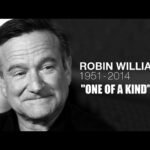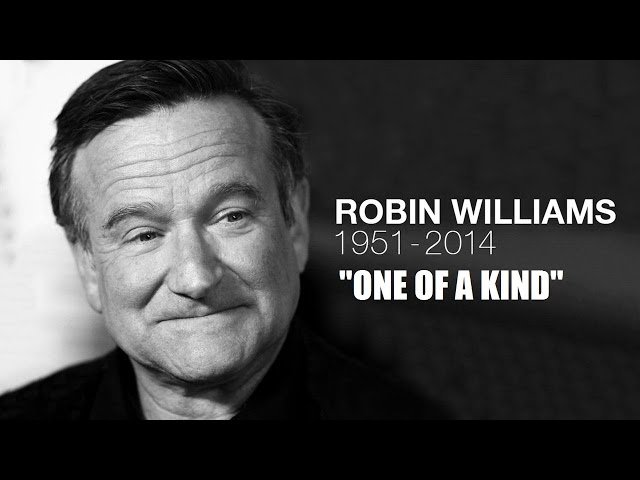
Whatever the role, Robin Williams found the humanity inside it.
I still miss Robin Williams being in the world.
I miss knowing that somewhere out there, he might be working on another film, discovering another character, or finding another way to surprise us. I had been watching him since Mork & Mindy, when he arrived in our living rooms as that wonderfully peculiar alien who seemed fascinated by everything human beings did.
And what a joy he was.
If you grew up watching Robin Williams, you know what I mean. He was one of those performers who became part of your life without ever knowing you. You got older, your life changed, the world changed, and there he was, bringing something new to the screen.
But what I appreciate more as I look back is the extraordinary quality of his work. Not simply how funny he was, although goodness, that man could make you laugh. It was the depth. The intelligence. The range. His ability to make even the most outrageous character feel like someone with a life beyond the scene we were watching.
Robin Williams could make us laugh at the absurdity of being human without ever making humanity itself seem small.
The Birdcage: Comedy With a Heart
I can think about The Birdcage right now and start laughing.
Robin Williams and Nathan Lane together were something special. Lane played Albert with glorious theatrical energy, while Williams played Armand Goldman, his longtime partner, with a different kind of comic brilliance.
What made that film work so beautifully was that neither character had to become a shallow caricature for the audience to enjoy the comedy.
Armand was a father. He was a partner. He ran a business. He loved his family, became frustrated with them, made mistakes, and sometimes struggled to understand the people closest to him.
He was also funny. Very funny.
And Robin knew when to let Nathan Lane take the scene. Think about the generosity and discipline that requires from a performer who could command almost any room. He didn’t need every joke or every moment of attention. Sometimes his reactions to Albert were funnier than anything he could have said.
Beneath all that laughter was a family trying to navigate the fear of rejection, the pressure to pretend, and the desire to be accepted.
The comedy worked because the people mattered.
That’s something worth appreciating in a time when human beings are so often reduced to labels, positions, and stereotypes. Armand and Albert were allowed to be complicated, imperfect, loving people.
And the audience was trusted to recognize them as such.
A Genie Who Wanted Something for Himself
Then there was the Genie in Aladdin.
What a performance.
Robin brought that character to life with an astonishing parade of voices, impressions, jokes, and personalities. The energy was almost impossible to contain.
But underneath the comedy was something tender.
The Genie could grant extraordinary wishes for other people. He could produce wonders, change appearances, and make the impossible seem ordinary.
Yet he wanted something he couldn’t simply give himself.
Freedom.
And suddenly, this hilarious magical character had an emotional life that children and adults could understand.
Isn’t that something?
A character whose purpose was to serve others had a dream of his own.
For Survivors, especially those who have spent years meeting other people’s needs, there’s a lovely lesson in that story.
Being useful to everybody else is not the same as being free.
You can be generous, talented, dependable, and deeply loved while still needing a life that belongs to you.
Robin gave us a Genie who made us laugh. He also made us care whether that Genie ever got to live for himself.
He Could Play a Villain Without Erasing His Humanity
And then there was One Hour Photo.
If you knew Robin primarily from his comedies, this performance could be startling.
He played Sy Parrish, a lonely photo technician whose fixation on a family becomes deeply disturbing. There was nothing charming about the harm Sy caused. His behavior was invasive, frightening, and wrong.
But Robin didn’t play him as a cardboard villain.
He allowed us to see loneliness, longing, emotional deprivation, and a desperate desire for belonging. He made the character unsettling partly because Sy seemed like a real person rather than a theatrical monster.
That takes extraordinary skill.
And it raises a distinction that Survivors know is important: understanding someone’s humanity does not require excusing their behavior.
We can recognize that a person has suffered and still hold that person responsible for the harm they cause.
We can understand without surrendering our judgment.
Robin’s performance made room for that complexity. He didn’t ask the audience to approve of Sy. He gave us a character whose actions were wrong and whose inner life was nevertheless worth examining.
He played a villain with a soul, without asking us to forget that the villain was dangerous.
The Quiet Brilliance of Good Will Hunting
Some of Robin’s most remarkable acting came when he barely raised his voice.
In Good Will Hunting, he played Sean Maguire, a therapist grieving the death of his wife while trying to reach a gifted young man who had learned to protect himself through anger, humor, and emotional distance.
Sean was no perfect man. He had his own wounds, regrets, and limitations.
But he understood something important about Will Hunting. Intelligence could not substitute for experience. Being able to explain life was not the same as allowing yourself to live it.
Robin brought such restraint to the role. A look, a pause, a change in his voice could reveal more than a speech.
His performance earned him the Academy Award for Best Supporting Actor.
And it remains one of the finest examples of his ability to communicate tenderness without sentimentality.
I think about how much Survivors can recognize in Will’s defenses. The humor that keeps people at a distance. The quick intelligence used to avoid vulnerability. The fear of being known well enough to be hurt.
Sean didn’t always get everything right. But he was willing to encounter the person underneath those defenses.
And Robin made that encounter believable.
He Never Had to Make People Simple
Think about the distance between the characters he played.
In Dead Poets Society, he was John Keating, a teacher encouraging young men to think independently and recognize the possibilities in their lives.
In Awakenings, he was Dr. Malcolm Sayer, a reserved physician whose quiet attention to his patients became one of the film’s great strengths.
In Mrs. Doubtfire, he played Daniel Hillard, a father whose love for his children was genuine even while his deception and disregard for boundaries caused real problems.
And then there were Good Morning, Vietnam, The Fisher King, What Dreams May Come, Jumanji, and so many others.
He could be outrageous, restrained, vulnerable, frightening, ridiculous, and heartbreaking.
He didn’t need every character to be admirable. He didn’t need every character to be likable.
He seemed to understand that people could be contradictory and still be worth portraying with care.
That is the beautiful art of being deeply human.
We are more than the roles we perform. More than our worst mistakes. More than our accomplishments, our reputations, or the labels other people attach to us.
And recognizing someone’s humanity doesn’t mean pretending that everyone is safe or that every action deserves forgiveness.
It means refusing to confuse one part of a person with the entirety of their existence.
His Life Was Larger Than His Death
Robin Williams died by suicide in August 2014, at age 63.
After his death, it became known that he had been suffering from Lewy body disease, a serious neurological condition. His widow, Susan Schneider Williams, later wrote about his symptoms and their struggle to understand what was happening. Her account, published in the medical journal Neurology, helped bring public attention to the disease.
That history deserves to be told accurately and compassionately.
But I don’t want to make every remembrance of Robin Williams a return to his final months.
I want to talk about the work.
The remarkable quality of it. The risks he took. The generosity of a performer who could let somebody else shine. The humor that could fill a room and the quiet moments that could break your heart.
I want to remember the man who gave a Genie a longing for freedom, a therapist a wounded heart, and a loving family in The Birdcage the dignity of being more than a joke.
And I want to laugh.
Because we can still do that.
We can watch his films and laugh until our sides hurt. We can revisit a performance and notice something we missed years ago. We can introduce his work to another generation.
None of that means we have forgotten how his life ended.
It means we remember how much life came before it.
We Are Allowed to Remember the Joy
There’s something here for Survivors, for grieving families, and for anyone who has watched a painful event become the headline of someone’s entire existence.
Sometimes people are remembered primarily for what happened to them. Their accomplishments, personalities, relationships, humor, and ordinary joys disappear behind the tragedy.
But a human life deserves more room than that.
A woman who experienced violence had a life before the violence. She has interests, talents, relationships, and possibilities that are not defined by the person who harmed her.
A person who dies after a long illness was more than a patient.
A person who dies by suicide was more than the circumstances of their death.
We do not have to hide suffering to honor a life. And we do not have to make suffering the centerpiece of every remembrance.
We can tell the truth about the pain and still give the joy its rightful place.
That’s what I want to do when I remember Robin Williams.
What a Treasure He Left Us
I miss the possibility of another wonderful performance. Another surprising role. Another opportunity to watch him find the humanity inside a character nobody else could have played quite the same way.
But I am so grateful for what he left us.
The laughter. The tenderness. The imagination. The extraordinary depth and range of his work.
I can still laugh watching Mork and Mindy. I can still be intrigued by The World According to Garp. I can still marvel at what he accomplished with the Genie in Aladdin.
Robin Williams spent decades becoming other people for us. And somehow, through all those characters, he kept reminding us what it means to be human.
He could be larger than life without making life itself seem small.
What a gift he left us.
What a treasure.
A SURVIVORAFFIRMATIONS REFLECTION
I am allowed to remember the joy without forgetting the sorrow. I can honor what was beautiful, acknowledge what was painful, and carry both truths without apology. No single chapter gets to claim the entirety of a life.