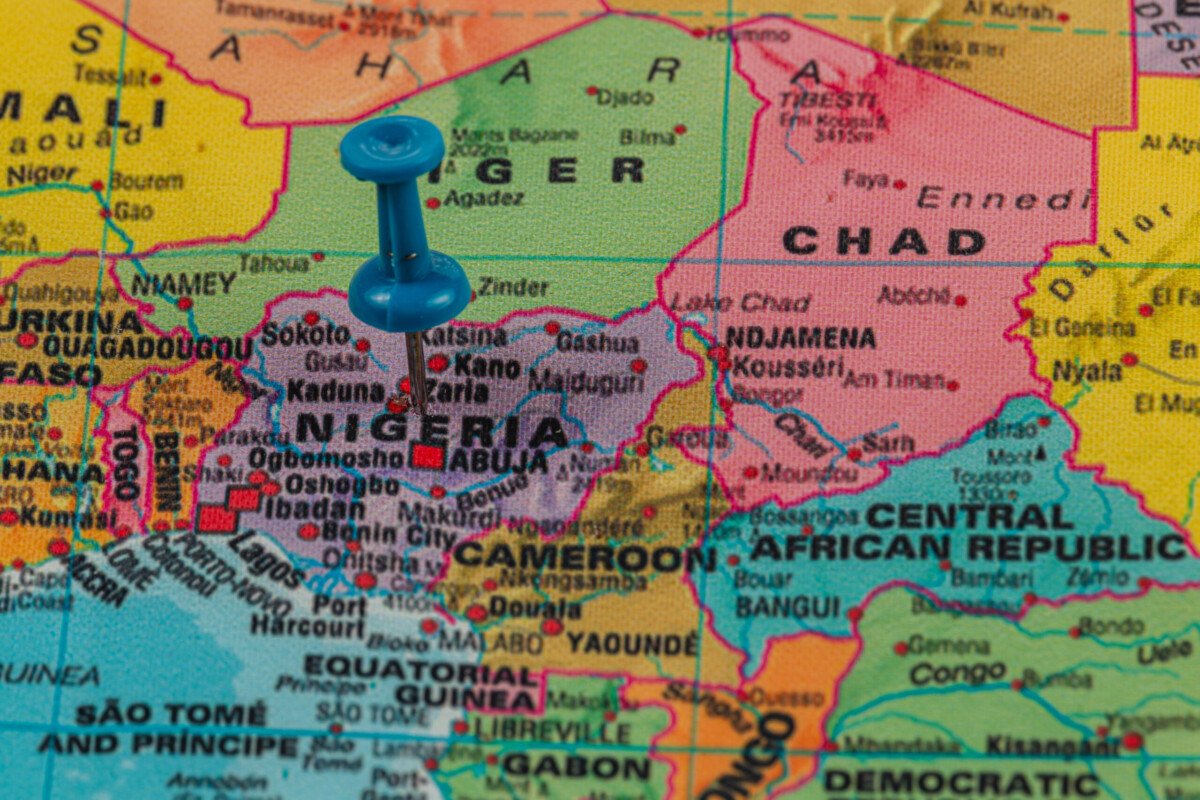
It began with a question at a woman’s home. Not a battlefield. Not a government building. Not a grand speech delivered before thousands of peop
It began with a question at a woman’s home.
Not a battlefield. Not a government building. Not a grand speech delivered before thousands of people.
A question.
In 1929, in southeastern Nigeria, an Igbo woman named Nwanyeruwa was approached by a man named Mark Emeruwa. He was working under Warrant Chief Okugo, one of the local men connected to the British colonial system of indirect rule.
Emeruwa wanted information about Nwanyeruwa’s household and possessions.
How many people were in the household? What did she own?
To someone unfamiliar with what was happening in colonial Nigeria, the questions might have sounded ordinary. Nwanyeruwa understood their possible meaning.
British authorities were already taxing men, and women feared that officials were preparing to tax them next. Gathering information about women, their households and their property looked suspiciously like preparation.
So Nwanyeruwa did something women have done across centuries when something does not feel right.
She talked to other women.
That simple act helped set a movement in motion.
The Women Already Had Ways of Handling Trouble
To understand what happened next, we have to leave behind the idea that African women needed Europeans to teach them how political participation worked.
Women in southeastern Nigeria already had traditions of collective organization. They traded in markets, communicated through women’s networks, gathered to address community problems and had ways of responding when someone violated accepted standards.
British colonial authorities did not fully understand the political world they had entered.
Under indirect rule, British officials relied heavily upon selected local men known as warrant chiefs. These men could gain considerable authority through their relationship with the colonial government.
But British officials were trying to fit African societies into a political arrangement they understood. In doing so, they could strengthen male authority while weakening or overlooking institutions through which women had exercised influence.
That distinction changes the story.
The women of 1929 were not simply women begging to be included in politics.
They were women who already understood collective power.
And when they believed something threatening was approaching, they used it.
One Woman Told Another
After her confrontation with Emeruwa, Nwanyeruwa carried the news to other women.
The women began communicating through their networks.
Think about how ordinary that must have looked at first. Women talking. Women comparing information. Women asking one another what they had heard.
Yet comparing notes can be powerful.
One woman can be persuaded that she misunderstood something. She can be told she is overreacting, being difficult or worrying unnecessarily. But when another woman says, “He came to my house too,” the picture begins to change.
Then another woman speaks.
Then another.
Soon the question is no longer, “Am I imagining this?”
The question becomes, “What is happening to us?”
Women began gathering around Oloko and demanding answers about taxation and the actions of Warrant Chief Okugo.
Their numbers grew.
News traveled.
What began locally spread across communities in southeastern Nigeria until thousands of women were participating in what would become one of the most significant women-led challenges to British colonial rule in West Africa.
Then the Women Came
They came to Native Courts and colonial administrative centers. They surrounded the homes and offices of warrant chiefs. They demanded explanations and challenged abuses of authority.
Some demanded that warrant chiefs surrender their caps, symbols of the authority colonial government had bestowed upon them.
And the women brought something else with them.
An old political weapon.
Their voices.
In parts of southeastern Nigeria, women had traditions sometimes described in English as “sitting on a man.”
The phrase almost makes it sound gentle.
It wasn’t.
When a man seriously violated community expectations, women could gather around his home or workplace. They might sing about what he had done. They could dance, chant, make noise, ridicule him publicly and remain there for hours.
Sometimes the songs were insulting.
Sometimes they were merciless.
The point was not violence for violence’s sake. Public accountability itself was the pressure.
A man accustomed to dealing with one woman at a time now faced women collectively.
That changes the balance of power.
There is wisdom tucked inside that old practice. Isolation often favors the person behaving badly. Community changes the mathematics. A woman standing alone can be dismissed as troublesome. A room full of women describing the same problem is much harder to wave away.
The Nigerian women understood this long before anyone invented modern language for collective advocacy.
The Colonial Government Called It a Riot
As the movement spread, demonstrations occurred across southeastern Nigeria, including around Aba and other communities. Native Court buildings and other symbols of colonial authority were attacked or damaged in some places.
British authorities increasingly treated the women as a threat.
Eventually, colonial police and troops opened fire on women at several locations.
More than 50 women were killed, according to widely cited historical accounts. Others were wounded.
Women had raised concerns about government policy and abuses of authority.
The answer, eventually, was gunfire.
For years, English-language history commonly remembered what happened as the Aba Women’s Riot.
But listen to what happens when we change one word.
A riot.
A war.
“Riot” draws our attention toward disorder. It invites us to look at broken buildings, crowds and disruption.
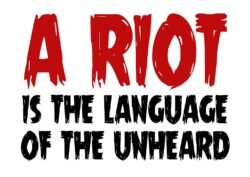
A RIOT IS THE LANGUAGE OF THE UNHEARD – Rev. Martin Luther King Jr.
“Women’s War” directs our attention toward the political struggle that produced them.
Naming has always had power. Whoever gets to describe an event can quietly tell later generations whom to consider reasonable, dangerous, respectable or troublesome.
Women know something about that too.
A woman can describe what happened to her and find herself becoming the subject of the conversation. Suddenly people are discussing her tone, her anger, her timing, her language and whether she handled everything perfectly.
The original behavior disappears behind an investigation of her reaction to it.
History can do the same thing.
Calling 1929 simply a riot risks making thousands of organized women look like an unruly crowd rather than people responding to colonial power, economic fear and political displacement.
They knew why they had come.
What the British Had Failed to See
The Women’s War forced colonial authorities to confront something they had underestimated.
Women were political actors.
Not because Britain had graciously introduced them to politics, but because women already possessed networks, institutions, economic influence and traditions of collective action that colonial administrators had failed to properly understand.
That may be one of the most beautiful parts of this history.
Sometimes power does not look like the people in charge expect power to look.
It may not have an office.
It may not have a title.
It may not have permission.
Sometimes it looks like women talking across marketplaces and villages. Sometimes it sounds like songs outside the house of a powerful man. Sometimes it begins when a woman hears a question, recognizes the danger hiding behind it and refuses to keep her concern to herself.
Nwanyeruwa could have gone home wondering whether she had made too much of the encounter.
Instead, she spoke.
Other women listened.
Then they checked what was happening around them.
There is a quiet lesson there for any woman who has ever walked away from an encounter thinking, Something about that wasn’t right.
You do not have to turn every uncomfortable feeling into an accusation. You do not have to know the entire story immediately.
But you are allowed to notice.
You are allowed to ask questions.
You are allowed to seek information.
You are allowed to tell someone you trust.
And when several women discover that they have been experiencing the same troubling behavior, they are allowed to take that pattern seriously.
Those are not small freedoms.
They can save lives.
They Were Not Asking to Become Powerful
The British colonial government eventually investigated the uprising and made changes to aspects of the warrant-chief and Native Court systems.
But the deeper legacy of the Women’s War cannot be measured only by whatever reforms followed it.
Thousands of women had demonstrated something for everyone watching.
Their power had not begun when officials finally noticed them.
It had been there all along.
That is worth remembering because women are so often taught to imagine power as something another person hands us: a position, an invitation, a credential, permission to speak.
But some forms of power are older and closer than that.
Knowing what you see is power.
Sharing information is power.
Recognizing a pattern is power.
Having somewhere safe to carry your concern is power.
Standing beside another woman while she tells the truth is power.
And refusing to let somebody convince you that you are alone when you are not may be one of the oldest forms of women’s resistance there is.
Nearly a century ago, a woman in southeastern Nigeria was asked questions about her household.
Something about those questions troubled her.
She told other women.
Other women began talking.
And thousands eventually came.
History remembers the noise they made.
We should also remember the conversation that came first.