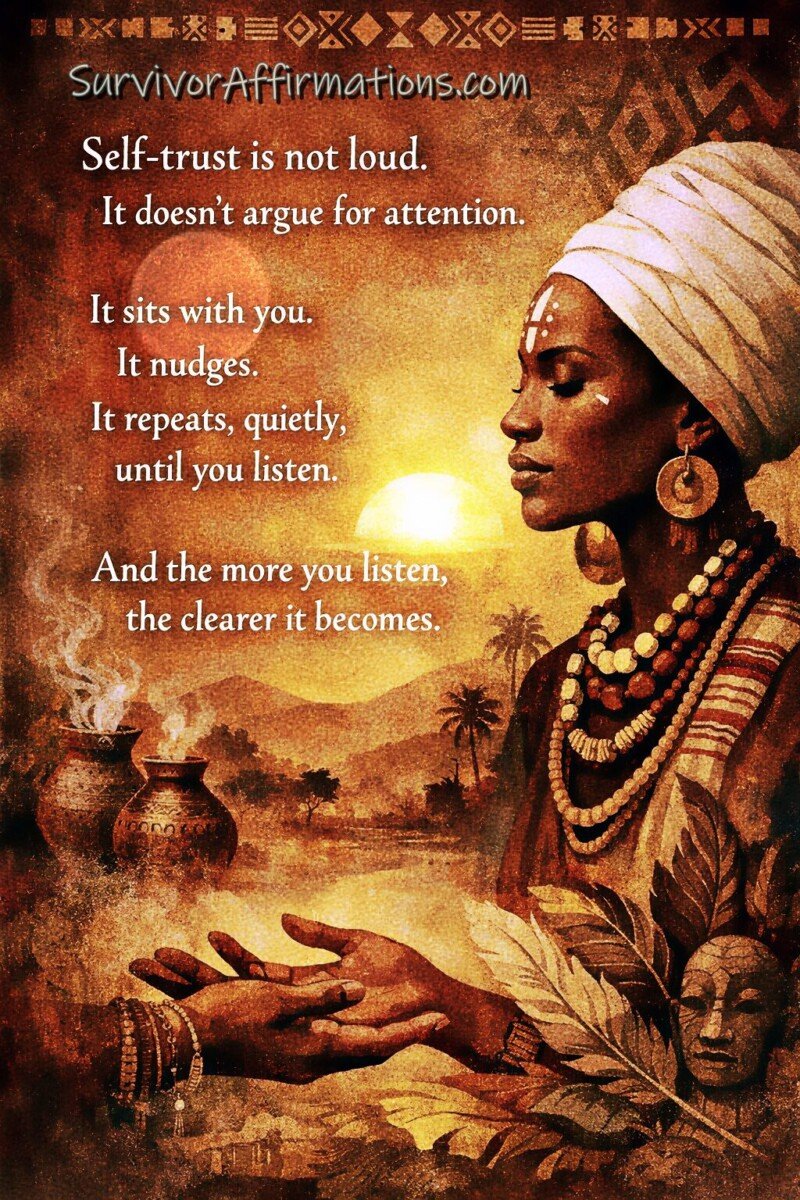
There is a quiet truth that has always existed, even when it wasn’t written down. Across the lands now known as the Democratic Republic of the Cong
There is a quiet truth that has always existed, even when it wasn’t written down.
Across the lands now known as the Democratic Republic of the Congo, women have long held roles of spiritual insight, healing, and guidance. Not in a way meant to intimidate or mystify. But in a way that felt… woven into everyday life.
This is not something to fear.
It is something to understand.
Women as guides, not gatekeepers
In many Congolese traditions, spiritual life was never separate from daily life.
Women were often:
-
Healers
Working with plants, touch, prayer, and ancestral knowledge -
Listeners of the unseen
Paying attention to dreams, intuition, and subtle shifts others might overlook -
Advisors to families and communities
Helping people make sense of grief, conflict, illness, or change -
Protectors of life transitions
Especially around birth, womanhood, and the crossing between life and death
You may hear words like nganga used to describe spiritual specialists.
These roles were not about control or spectacle.
They were about care, balance, and responsibility.
This was not “mystical” in the way some people often imagine
There’s a tendency to turn African spiritual traditions into something exotic or frightening.
But for the people living within these traditions, it was and is now, grounded.
Practical.
Relational.
It answered questions like:
-
Why is this person not well?
-
What is out of balance?
-
How do we restore peace?
It wasn’t about power over others.
It was about restoring harmony.
A gentle word about intuition and the “third eye”
You may have heard the phrase “third eye.”
In many global traditions—not just African ones—this idea points to:
-
deep awareness
-
inner knowing
-
the ability to perceive beyond what is immediately visible
In Congolese and Central African contexts, this isn’t usually framed with that exact term.
But the practice of paying attention to inner knowing absolutely exists.
Women who were respected in spiritual roles were often:
-
observant
-
intuitive
-
deeply attuned to people and patterns
Not magical in a sensational way.
But skilled in noticing what others miss.
That kind of awareness can feel unfamiliar if you weren’t raised around it.
But it is not dangerous.
It is human.
What history tried to bury
When colonial systems and missionaries entered these regions, they often:
-
dismissed these roles as “witchcraft”
-
replaced women’s authority with male-led structures
-
taught communities to distrust their own knowledge systems
So what once felt normal began to feel hidden.
Or forbidden.
But hidden does not mean gone.
Affirmations for Self-Trust and Inner Knowing
Read these slowly. Let them meet you where you are.
-
I am allowed to trust what I sense, even when I cannot explain it yet.
-
My inner knowing is not my enemy. It is a form of protection.
-
I do not need permission to pause, reflect, or step back when something feels off.
-
There is wisdom in me that has been shaped by experience, memory, and care.
-
I can listen to myself without rushing to doubt or dismiss what I feel.
-
My awareness is not “too much.” It is information.
-
I honor the quiet signals in my body, my thoughts, and my spirit.
-
I can take my time. Clarity does not need to be forced.
-
I trust myself to notice patterns, even the subtle ones.
-
I am allowed to change direction when something no longer feels right.
-
My discernment grows stronger each time I choose to listen.
-
I do not need to override myself to keep the peace.
-
What I sense matters, even if others do not understand it.
-
I can be grounded, thoughtful, and intuitive at the same time.
-
I am learning to recognize the difference between fear and knowing.
-
I can hold onto my clarity, even in environments that try to blur it.