When we talk about the giants of Black music, certain household names instantly clear the room. But there is a specific, sacred tier of artistry occup
When we talk about the giants of Black music, certain household names instantly clear the room. But there is a specific, sacred tier of artistry occupied by women who did not just sing music—they anchored it. They gave it gravity.
This Black Music Month, we are turning down the outside noise to step into the sanctuary of an absolute master: Marlena Shaw.
If you have ever felt like you were fighting to keep your peace, to keep your boundaries intact, or to simply be heard in a world that tries to rewrite your story, Marlena Shaw is the sonic companion you need. She passed away in early 2024 at the age of 84, but the blueprint she left behind is eternal.
The Voice You Know (Even If You Don’t Know Her Name)
It is one of the great ironies of modern music: millions of people hear Marlena Shaw every single day without realizing who she is. Her definitive 1969 rendition of “California Soul” possesses a baseline and a vocal ascending hook so perfect that it has become an essential part of our cultural fabric.
“How Many Soundtracks Have I Heard Her On?”
Because her sound evokes an instant, undeniable sense of cinematic freedom and gritty elegance, Hollywood has kept her on loop for decades. Her music has been featured on dozens of official movie, television, and video game soundtracks, as well as massive global commercial campaigns. You have likely heard her work scoring scenes in everything from Grand Theft Auto to critically acclaimed dramas, and her records have been sampled hundreds of times by hip-hop and electronic icons like Gang Starr, St. Germain, and Diplo.
She is the secret ingredient behind some of the most recognizable soundscapes in modern media.
The Study of Sound & Soul: What You Need to Know
If you are a student of Black music—or simply someone studying how to project your own raw truth into the world—Marlena Shaw is a masterclass. Here is what makes her mandatory listening:
1. The Power of Genre Sovereignty
Marlena was the very first female vocalist signed to Blue Note Records in 1972. Before that, she sang with the legendary Count Basie Orchestra and recorded for Chess Records’ Cadet imprint.
If you are studying soul, you must understand that Marlena refused to let the industry cage her. She sang jazz with the precision of Sarah Vaughan, belted the blues with the grit of Dinah Washington, and delivered funk and disco with effortless warmth. She proved that a Black woman’s voice is not a monolith; it is an ocean.
2. The Narrative Monologue (The “Rap”)
Long before hip-hop took over the airwaves, Marlena was pioneering the art of the musical monologue. Tracks like “Yu Ma / Go Away Little Boy” and her live recordings are famous for her mid-song spoken-word breakdowns. She would stop singing, address the audience directly, tell a hilarious or heartbreaking story about relationships, boundaries, and self-worth, and then slide back into a flawless vocal melody.
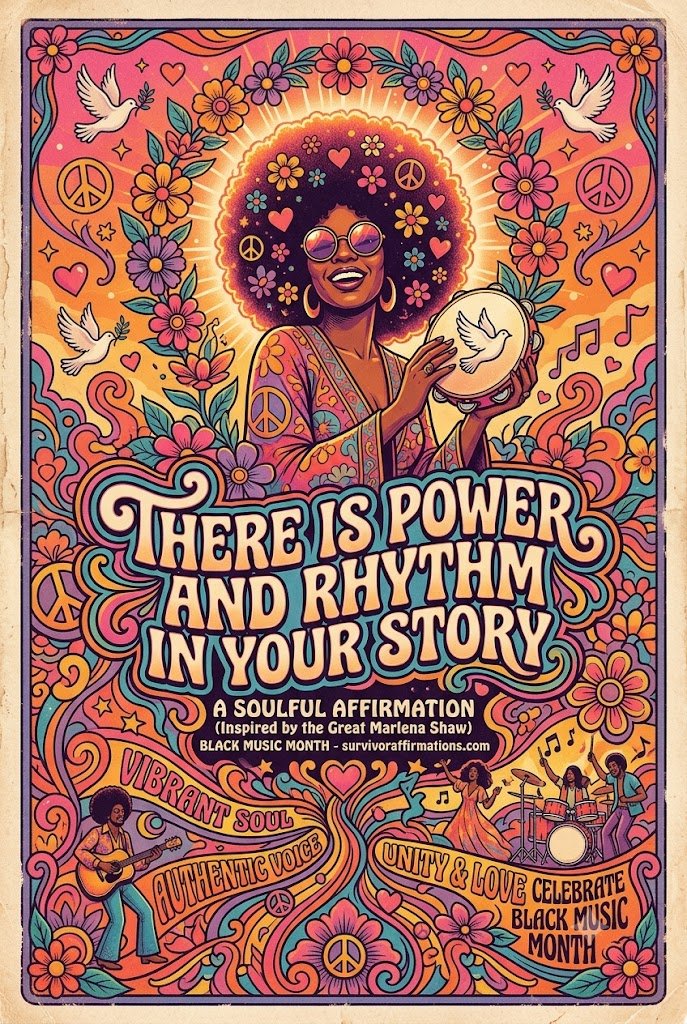
The Lesson: She taught generations of vocalists that your speaking voice—your literal story—holds just as much power and rhythm as your singing voice.
What Made Her Truly Special?
Beyond the impeccable pitch and the timeless records, Marlena Shaw possessed a quality that defines the core of survival and affirmation: Absolute Authority.
When Marlena sang, she was completely in command of her space. Her classic 1974 album title said it all: Who Is This Bitch, Anyway? It was audacious, brilliant, and deeply protective of her own identity.
In her landmark anthem “Woman of the Ghetto,” she co-wrote a stark, unblinking look at systemic struggle and the resilience of Black mothers. She didn’t sing it with despair; she sang it with demand. She looked the world in the eye and asked, “How do you raise your kids in a world that don’t care?”
That is what made her special. She didn’t perform for your comfort. She performed to affirm her own existence, and in doing so, she gave us permission to do the same.
The Starter Kit: 3 Tracks for Your Healing Playlist
If you are ready to let Marlena Shaw anchor your spirit this month, start with these three pillars:
-
For Pure Elevation: “California Soul” — Play this when you need to remember what it feels like to soar above your circumstances.
-
For Grounding & Truth: “Woman of the Ghetto” (Live at the Montreux Jazz Festival, 1973) — Listen to the raw power of her improvisation. It is a masterclass in turning frustration into high art.
-
For Setting Boundaries: “Yu Ma / Go Away Little Boy” — Listen to her speak. Let her remind you that you have the right to tell anything that doesn’t serve your peace to pack its bags.
Happy Black Music Month. Go claim your joy, protect your peace, and put some respect on Marlena Shaw’s name today.