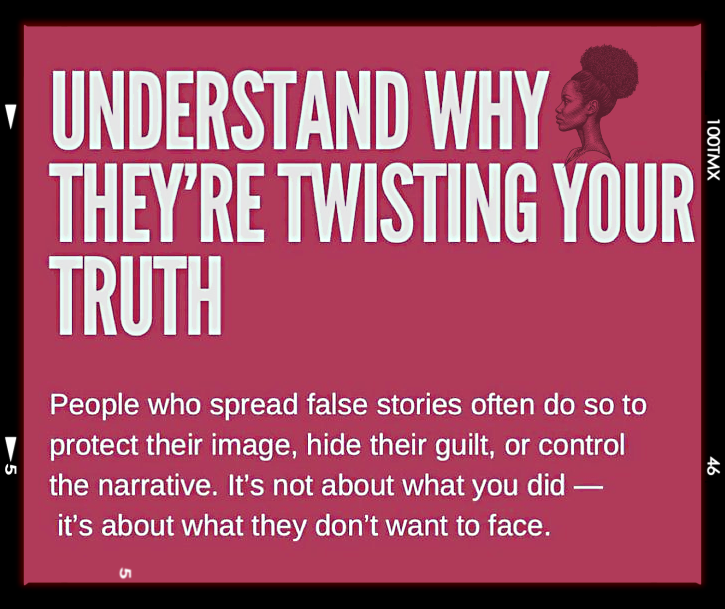
It isn't that people think that Black art should never be critiqued, but there is undeniable and die-hard racism within the critiques. Further, when m
It isn’t that people think that Black art should never be critiqued, but there is undeniable and die-hard racism within the critiques. Further, when most people dislike other art, they simply choose not to engage with it in favor of what they do like. Not so, with Black art that garners high praise. 
Some of you are about to learn something the hard way….like we and all the the people before us did.
The conversations around Sinners
(nominated for a record breaking 16 Oscars and 18 NAACP awards) are about to expose a truth Black Americans have known for generations:
Many people were taught how to consume Black American art.
BUT, they were never taught how to respect and appreciate it.
They learned how to copy it.
Dance to it.
Profit from it.
Quote it.
But not how to sit with it.
Not how to read it through the eyes of the culture that made it.
Not how to analyze it without shrinking it.
So the language starts.
“Popcorn movie.”
“Let’s see how it ages.”
“Overhyped.”
“Not that deep.”
Translation:
I don’t see myself centered, so I don’t recognize the value.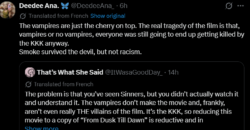
There is no white savior to orient them.
No familiar doorway into the story where they get to be the moral center.
So instead of listening, they pretend to “grade”.
They will overlook:
- the Choctaw presence (as someone said: “one of the hardest film photos of the year”)This is a great video explaining why the Choctaw were chasing Remick.
- Here’s another
- the Irish music (did y’all catch that line dance?)
- the dynamic Asian characters (for me, I love the departure from the typical Westernized “demure & non-observant” Asian woman-Black people know there is more. She is human.)
- the blues lineage (a genre originated by Black Americans with Blues legend Buddy Guy making an appearance)
- the sacredness of the music montage scene that made film LEGEND Spike Lee leap like an excited child with sincere enthusiasm
- the white woman shaped by Black life, raised by a mother who took in Black twins, bound by a complicated love story this country doesn’t like to name
- the fact that the film quietly unfolds as the last night of many lives. It could
 have been a sad obituary but it was a celebration of life. Much like the going home services (funerals) in Black culture.
 have been a sad obituary but it was a celebration of life. Much like the going home services (funerals) in Black culture.
 That alone lifts it out of “popcorn.”
But nuance is invisible to people trained to see Black stories as disposable.
This is not new. We were there. We heard it before.
They said it about The Color Purple.
They said it about What’s Love Got to Do With It.
They said it about Boyz n the Hood.
They said it about Eve’s Bayou.
They said it about Crooklyn, Mo Better Blues, and Do the Right Thing
They say it about any Black story that does not kneel.
No matter how groundbreaking. The quality of the work was never the issue.
If the story does not position certain people as rescuer, validator, or final authority, they call it “small.” If Black Americans are not criminals, sexually promiscuous, or servants then not everyone knows how to engage with that thoughtfully.
At least not from a self appointed position that looks down as the “master” or “judge”.
Not from a place that can hold several dynamic truths at once because it lacks the courage to face OG truths. Foundational truths.
And yes—
many of us learned this in college classrooms first. Rejected it in our essays and in our spoken the truth.
Where professors “correct” your interpretation.
Where your cultural literacy is treated as bias.
Where your lived understanding is treated as emotional noise.
They will take the teaching posture.
They will explain your story back to you. Maybe even sell it too.
Flatten it.
Sand it down.
Rename it something safer.
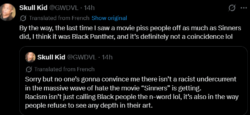
But in ten years, everyone will “remember” how they didn’t behave this way.
And then wonder why there are so few films like this.
- As if scarcity is accidental.
- As if it is not engineered. Intentional.
- As if Black Americans controlling narrative, memory, grief, joy, complexity, and ending is not treated as dangerous.
We are not supposed to tell our own stories.
Not with this much interior life.
Not with this much authority.
Not without permission.
And to my people—and to every person from a minoritized culture watching this pattern unfold:
If it takes this much effort to dismiss your stories,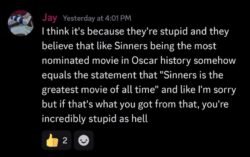
to reframe them,
to downgrade them,
to re-teach them,to mock them into smallness—
then you are looking at proof of value.
No one attacks what is empty.
People do not work so hard to minimize what has no power.
They do not rush to control what does not shape the world.
Create anyway.
Write anyway.
Film anyway.
Tell it from the inside.
Tell it without translation.
Tell it without apology.
Your stories are not “popcorn.”
They are memory.
They are lineage.
They are evidence.
They are inheritance.
And some truths only sound loud to people who benefit from silence.
Keep shining and make them put on sunglasses.
as i post this today………
so why learn to engage when you can just tear it down and say that it has “no value.”
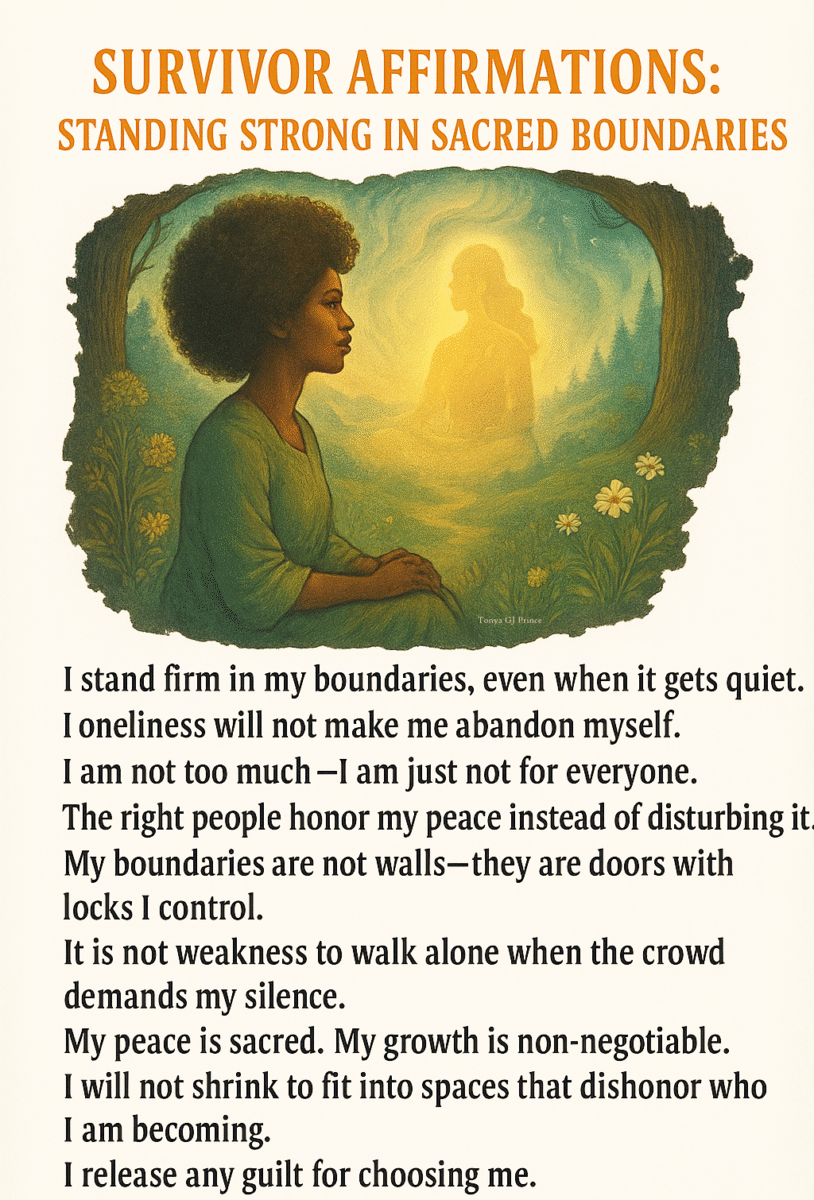
AFFIRMATIONS FOR CREATORS
-
-
I am not here to translate my soul into something easier to digest.
-
My voice is not an argument.
It is a record. -
I create from memory, not from approval.

-
-
Their misunderstanding does not reduce my meaning.
- I am not responsible for educating people who profit from not knowing.
- My culture is not a genre.
It is a universe. -
I do not need to center myself in someone else’s mirror to be real.
-
What unsettles them is not my craft —
it is my authority. -
I refuse to shrink what my ancestors survived to preserve.
-
My art is not “content.”
It is continuity. -
I am allowed to be complex without being explained away.
-
I will not soften my truth to be graded gently.
-
My stories are not lonely.
They are accompanied by the dead, the living, and the unborn. -
I create even when the room pretends not to notice.
-
Being minimized is not a verdict.
It is a reaction. -
I am not behind my time.
I am ahead of their courage. -
I belong to a lineage of people who told stories while the world tried to erase the language.