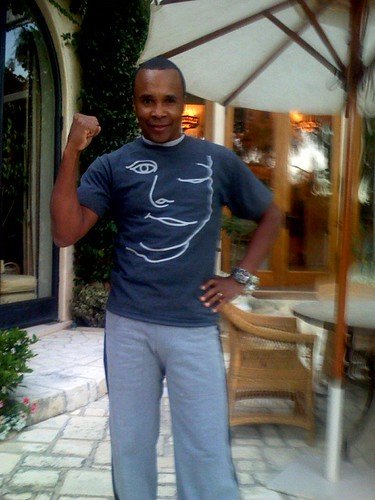
Sugar Ray Leonard knew how to fight. By his early twenties, the quiet kid from Palmer Park, Maryland, had become an Olympic gold medalist, and profess
Sugar Ray Leonard knew how to fight. By his early twenties, the quiet kid from Palmer Park, Maryland, had become an Olympic gold medalist, and professional boxing would make his hands famous around the world. He would defeat men such as Roberto Durán, Thomas Hearns and Marvin Hagler and become one of the defining fighters of his generation.
Years later, Leonard revealed that during his youth in amateur boxing, adults within that world had sexually abused him. In one account, he described an encounter with a prominent Olympic boxing coach while Leonard was pursuing the future that would eventually make him famous. The young fighter had physical ability. The adult had age, authority and proximity to his Olympic ambitions. Leonard ran from the encounter and carried the experience privately for decades.
For Survivors, there is something important in that distinction. Knowing how to defend yourself physically and possessing power in a relationship are different things. Power can live in age, authority, money, reputation, opportunity, emotional attachment or control over something a person deeply wants.
Women know some of these arrangements intimately. A woman can run a company and become vulnerable at home. She can be financially independent while someone controls her emotionally. She can be intelligent, watchful, accomplished and physically strong while another person learns exactly where her trust lives. Survivors deserve to understand power in all its forms, because recognizing it can sharpen the instincts that protect a life.
Leonard’s story also asks us to look carefully at what happens after harm. His adulthood included enormous achievement, cocaine and heavy drinking, and violence within his marriage. During his divorce from Juanita Leonard, court records contained her allegations of physical abuse, and Leonard subsequently acknowledged physically abusing her. Contemporary reporting described allegations of violence occurring in front of their children.
That history belongs here because Juanita’s experience matters, too. Leonard’s childhood victimization remains true, and his responsibility for the harm he later caused remains his. Survivorship carries no exemption from accountability. Survivors can hold compassion for the wounded child someone once was while maintaining firm boundaries around the adult standing before them.
Decades passed before Leonard publicly told the fuller story of his own abuse. While working with writer Michael Arkush on his memoir, he initially disclosed only part of what had happened. Then Leonard happened to watch actor Todd Bridges discussing his own childhood sexual abuse on Oprah Winfrey’s program. Leonard later called that moment his “watershed moment.” Something in another man’s willingness to speak helped him become more open about his own experience.
There is a quiet lesson there for Survivors. Telling your story remains your choice, on your timetable, in the measure that feels right to you. And sometimes, somewhere beyond your sight, another Survivor may hear you and feel less alone. Bridges apparently gave Leonard something he needed simply by telling the truth about his own life.
Perhaps that is what makes Leonard’s story worth carrying beyond the boxing ring. The gloves, muscles and championship belts made his strength visible. His private history revealed how incomplete that picture was.
For every woman who has asked herself how she could have been so capable in one part of her life and so vulnerable in another, Leonard’s life offers an answer written across an unlikely body.
You can know how to fight and still encounter a kind of power your fists were never designed to defeat.
I can be strong and still recognize the places where I am vulnerable.
My intelligence, success and independence do not require me to handle everything alone.
I pay attention to every kind of power in my relationships, including emotional, financial, professional and social power.
I trust myself to notice when someone uses my dreams, affection or loyalty as leverage.
I am allowed to leave situations where my boundaries are treated as obstacles.
My ability to fight is only one form of strength.
I can understand another person’s wounds while holding them accountable for how they treat me.
Someone else’s painful history does not require me to accept harm.
My story belongs to me, and I decide when and how I tell it.
My voice may reach another Survivor I will never meet.
I deserve relationships where my strength can rest.
I choose people who respect my power rather than compete with it, diminish it or use it against me.