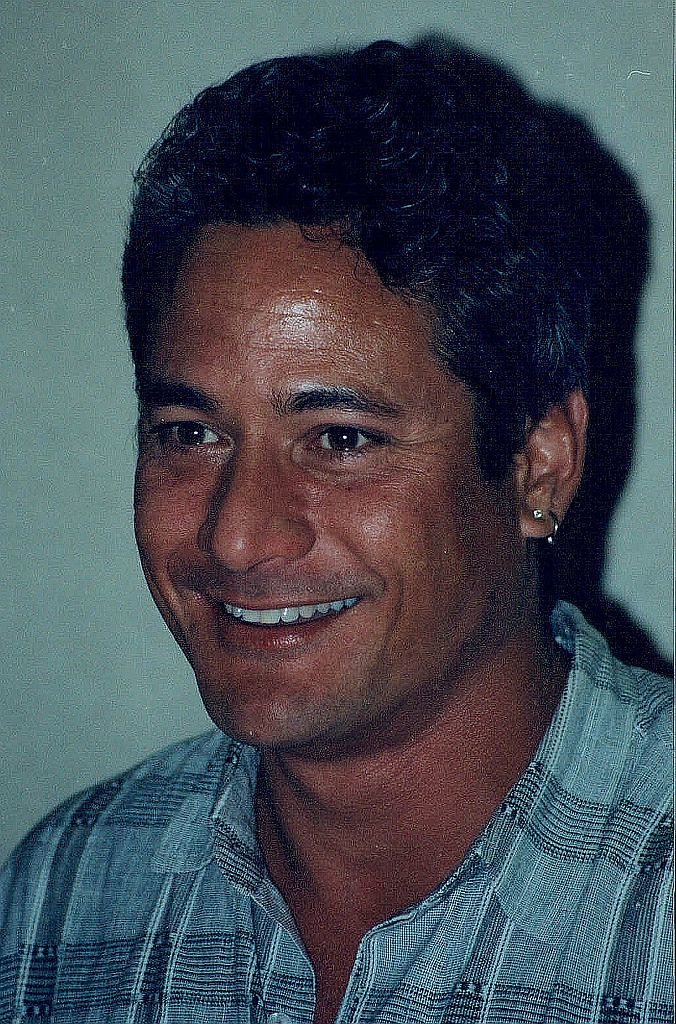
Greg Louganis knew what it meant to command his body. At the height of his career, he could climb ten meters above a pool, launch himself into open
 Greg Louganis knew what it meant to command his body.
At the height of his career, he could climb ten meters above a pool, launch himself into open air, rotate with astonishing precision and enter the water with barely a disturbance. He won four Olympic gold medals and became one of the greatest divers in history. Millions watched a man whose control seemed almost absolute.
His private life held experiences no medal could reveal.
Louganis has spoken about sexual abuse when he was young, rape as a young adult, and an abusive relationship later in his life. During part of that relationship, his partner was also his manager. Emotional intimacy, money and professional influence could occupy the same relationship.
His story offers Survivors an important understanding of power: physical strength is only one kind.
A person can be accomplished, intelligent, disciplined and exceptionally capable while someone else holds emotional, financial, professional or psychological power in a relationship. Survivors do not have to prove they were helpless enough for what happened to them to count. Louganis could perform feats almost nobody on Earth could perform. He could still be vulnerable to another human being.
His life also sits within a larger pattern familiar to researchers who study violence. People who experience abuse earlier in life can face an increased risk of victimization again. Awareness of that pattern belongs in prevention. It can help Survivors recognize coercion sooner, understand vulnerabilities with greater clarity, seek trustworthy support and build relationships in which power is shared rather than exploited. Responsibility for abuse remains with the person who chooses to abuse.
Louganis carried other realities the public could not see.
He was gay during an era when being openly gay could carry enormous personal and professional consequences. He learned he was HIV-positive before the 1988 Seoul Olympics, at a time when AIDS was surrounded by fear, misinformation and stigma. During those Games, he struck his head on the diving board during a preliminary round. He received stitches, returned to competition and ultimately won gold.
The audience could see the wound on his head. They could see the dive. They could see the medal.
They could not see everything the man standing on that platform was carrying.
Years later, Louganis publicly disclosed that he was gay and HIV-positive. His story widened the picture of who could be a Survivor, who could live with HIV, who could be an American sports hero and what human strength could look like when several of those identities existed in one person.
That matters for women, too.
Many women become remarkably capable because life has required capability from them. They raise children, manage households, earn degrees, build businesses, care for parents, lead organizations and keep entire families moving. Some become exceptionally skilled at functioning while carrying experiences very few people know about.
Competence does not erase vulnerability. Achievement does not measure the seriousness of harm. Functioning beautifully in public does not tell anyone what it costs to make it through the day in private.
Survivors are also allowed to recognize patterns in their lives without turning those patterns into accusations against themselves. Understanding why certain dynamics feel familiar can become useful knowledge. Learning what coercion looks like, noticing how someone handles boundaries, paying attention to financial control, isolation, intimidation and escalating demands can become part of protecting the life ahead.
Survival can also include being hurt more than once. Earlier survival remains survival. Each experience deserves to be understood on its own terms, and each new piece of awareness can belong to the Survivor who earned it.
Louganis also reminds us that disclosure has a timetable of its own. Parts of his story became public years after the world had already decided who Greg Louganis was. Survivors deserve ownership of that decision. Their stories can be spoken, written, shared selectively, held privately or entrusted to a few safe people. A Survivor’s history belongs first to the Survivor.
Perhaps that is why the image of Louganis on the diving platform stays with us.
There stands an Olympic champion whose body could do almost impossible things. He is also a man who experienced abuse, lived through the terror and stigma surrounding HIV, navigated relationships in which power could become dangerous, and eventually told the world more of the story behind the medals.
The champion and the Survivor were always the same man.
For Survivors who have ever wondered how someone so strong, accomplished, watchful or capable could still have been harmed, Greg Louganis leaves behind a deeply human answer.
Strength was there all along.
My strength and my vulnerability can exist together.
My accomplishments belong to me.
My history belongs to me.
I decide when, where and with whom I share my story.
I can recognize patterns with curiosity and compassion for myself.
Awareness gives me information I can use.
I can pay attention to how people respond to my boundaries.
I deserve relationships where power is respected and shared.
My ability to function does not measure what I have endured.
I can be deeply capable and still need support.
I am allowed to learn new ways of protecting my peace, my body, my money, my time and my future.
I remain the author of what comes next.