Sometimes the books that stay with Survivors aren't the ones written specifically about surviving. Sometimes they are simply somebody telling the t
Sometimes the books that stay with Survivors aren’t the ones written specifically about surviving.
 Sometimes they are simply somebody telling the truth about her life.
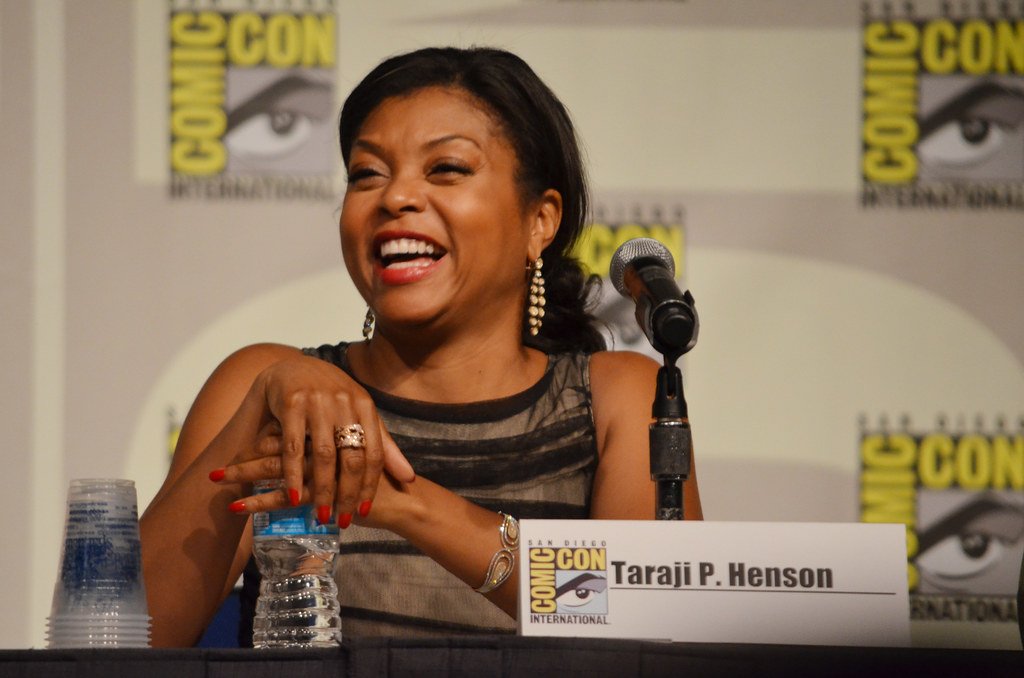
Taraji P. Henson’s memoir, Around the Way Girl, was published in 2016, years before some of her most public conversations about Black mental health, unequal pay and what it costs to keep pushing through systems that don’t always value you fairly.
But inside the book is another Taraji story.
There is a little girl watching the adults she loves make painful choices. There is a mother trying to protect herself. There is a father capable of being deeply loved by his daughter and of doing serious harm. There is a young woman who eventually encounters violence in her own intimate relationship. There is motherhood. Loss. Work. Money. Dreams. Grief.
And there are contradictions.
Lord, are there contradictions.
That may be one of the best reasons for Survivors to read it.
Because real families rarely arrange themselves into the clean little boxes people prefer when talking about abuse.
Here are seven reasons Around the Way Girl may be worth putting on your reading list.
1. Taraji lets two truths live in the same house
Taraji has spoken and written with tremendous affection about her father, Boris Lawrence Henson.
She has also told the truth about his violence toward her mother.
Those facts don’t cancel one another.
For some Survivors and their children, this is painfully familiar territory. A person who frightened one member of the family may have made another laugh. Someone who caused enormous harm may also be the person who taught you something, cooked for you, encouraged you, protected you in another circumstance, or became different later in life.
Children especially can carry memories adults would prefer them to sort neatly.
But memory doesn’t always cooperate.
Taraji doesn’t require herself to erase her love for her father in order to acknowledge what her mother endured. Nor does acknowledging his humanity require pretending his violence was less serious.
There is room here for Survivors who have complicated memories of complicated people.
2. Her mother’s leaving deserves our attention, too
Before Taraji became the woman millions of us recognize, there was a woman named Bernice trying to survive.
Taraji has described her father abusing her mother and her mother eventually getting away from him.
I keep thinking about that part.
Celebrity memoirs naturally center the celebrity. Survivor readers sometimes learn to look slightly to the side of the spotlight.
Look at Mama.
Think about what leaving meant in her time, with a little girl to raise and whatever fear, uncertainty, financial calculations and emotional history came with that decision.
Sometimes the heroic act in a child’s story happened years before that child had enough language to call it heroic.
A mother got herself out.
Her daughter remembered.
3. Taraji later had to recognize violence in her own relationship
This is where the story becomes even more complicated.
Taraji has written that the father of her son hit her.
She left.
For Survivors who grew up around domestic violence and later found themselves facing violence in their own relationships, there can be tremendous shame attached to that repetition.
I knew better.
I saw this before.
How did I end up here?
But witnessing violence as a child isn’t a vaccination against experiencing it as an adult.
Knowing that fire burns doesn’t mean nobody can ever trap you in a burning room.
Taraji’s story gives us another way to look at the question. What did she recognize? What did she decide? What did she refuse to normalize for herself and her child?
Sometimes breaking a pattern doesn’t mean the pattern never reaches your door.
Sometimes breaking it means deciding what happens after it arrives.
4. She doesn’t turn leaving into a fairy-tale ending
This is important.
Leaving an abusive relationship doesn’t cause the rest of life to become easy.
Survivors still have children to raise. Bills arrive. Careers have to be built. Grief comes. Family remains complicated. People we love make choices we cannot control.
Taraji continued raising her son while building an acting career.
Then another devastating loss came.
Her son’s father was murdered when their son was still a child.
Now she wasn’t simply navigating what had happened between two adults. She was raising a boy grieving his father.
That is a different kind of emotional terrain.
A woman can know that leaving was necessary and still grieve what happened to the person she left.
A child can love a father who hurt his mother.
A mother can protect her child from violence without asking that child to stop loving his father.
Human beings are capable of carrying more than one truth.
5. The book gives Survivors permission to be whole people
One thing I appreciate about Around the Way Girl is that abuse doesn’t swallow Taraji’s entire identity.
Good.
Survivors have had enough taken from them already.
Taraji writes about Howard University. Acting. Motherhood. Family. Hollywood. Hustling. Money. Dreams. Her parents. Mistakes. Humor. Determination.
She gets to have a whole life.
That is quietly important in Survivor storytelling.
There can be pressure to introduce a woman through the worst thing somebody did to her. Her assault becomes her biography. Her abusive relationship becomes the organizing principle of her existence.
But a Survivor had favorite songs.
She laughed until her stomach hurt.
She had inside jokes.
She worried about money.
She fell in love.
She made mistakes.
She wore something fabulous.
She changed her mind.
She dreamed about what she wanted to become.
Violence may be part of a woman’s history without earning ownership of her entire story.
Taraji’s memoir remembers the woman around the violence.
6. Her later mental-health advocacy makes the memoir even more interesting
The story didn’t stop when the book went to the printer.
Years later, Taraji would speak publicly about trying to find appropriate mental-health support for herself and her son. She has discussed grief, trauma, therapy and the particular difficulties Black people can encounter when trying to find culturally responsive care.
Eventually she helped create the Boris Lawrence Henson Foundation, named for the very father whose story is so complicated within her own family history.
Sit with that for a minute.
The little girl who witnessed violence grew into a woman who could tell the truth about that violence, continue loving her father, acknowledge his later changes, carry her own experiences, struggle to find help for her child, and eventually put resources into helping other people access mental-health care.
That isn’t a tidy redemption story.
It is something more useful.
It is a human story.
7. Survivors may recognize themselves in what Taraji refuses to simplify
Some of us have been handed very simple questions about enormously complicated lives.
Why did you love him?
Why didn’t you leave sooner?
Why did you speak to him again?
Why do your children miss him?
Why are you angry?
Why aren’t you angry?
Why can you remember something good about someone who did something terrible?
Why are you laughing when all of this happened to you?
Why haven’t you forgiven?
Why did you forgive?
Sometimes people aren’t actually asking Survivors questions. They are requesting a version of the story that will be easier for them to understand.
Taraji’s memoir reminds us that a woman’s life doesn’t owe anybody that convenience.
You can love somebody and tell the truth about what they did.
You can miss somebody and know you couldn’t safely live with them.
You can understand someone’s history without volunteering to become the place where that history lands.
You can recognize that someone changed without rewriting what happened before the change.
And you can leave.
There is one distinction worth protecting especially carefully.
A Survivor’s compassion for the person who harmed her belongs to her.
It is not an instruction for another woman to stay.
Taraji’s eventual relationship with her father cannot tell another woman what she should tolerate from hers. His later sobriety or remorse cannot retroactively make her mother’s fear unreasonable. Reconciliation, forgiveness, distance, affection, anger and estrangement are deeply personal territories.
Safety gets its own vote.
Maybe that’s the gift of Around the Way Girl
Taraji P. Henson didn’t write a textbook about domestic violence.
I’m glad she didn’t.
She wrote about a life.
And lives are where all our beautiful theories eventually have to survive contact with reality.
People love people who hurt them. Children love imperfect parents. Women leave men they once imagined growing old beside. Survivors remember wonderful afternoons alongside terrible nights. People change. Some don’t. Apologies come. Sometimes they never come.
And through all of that, a woman still has a life to live.
That may be the loveliest reason for Survivors to pick up Around the Way Girl.
Taraji isn’t only the worst thing she witnessed.
Her mother isn’t only what was done to her.
And neither are you.
A note for Survivor readers
Memoirs containing domestic violence, family violence, homicide, grief and other traumatic experiences can stir memories unexpectedly. You don’t have to prove anything by pushing through difficult pages.
Put the book down.
Skip a chapter.
Come back next month.
Laugh at the funny parts.
Read three pages and go make yourself some tea.
A book is supposed to accompany you.
You don’t have to surrender yourself to it.
Your story can contain contradictions without becoming untrue. Your love does not erase what happened. Your anger doesn’t erase the love that once existed. And somebody else’s transformation does not create an obligation for you to return and witness it.
You are allowed to tell the whole story.
Speaking of stories. People like to make up their own sometimes.
After Taraji spoke so openly in late 2023 about pay inequality, being undervalued, and the financial realities facing Black actresses, there was understandable concern that Hollywood might punish her for saying the quiet part out loud.
But that doesn’t appear to be the case.
She starred in Straw, and that movie became a substantial Netflix success. Netflix reported that Straw had its biggest week for a film in 2025 and remained No. 1 on its film chart for multiple weeks.
She also had a prominent role in Peacock’s Fight Night: The Million Dollar Heist alongside Kevin Hart, Don Cheadle, Samuel L. Jackson and Terrence Howard.
And 2026 makes the idea of a conventional blacklist even harder to sustain. Taraji made her Broadway debut in August Wilson’s Joe Turner’s Come and Gone, directed by Debbie Allen. Vogue reported that she was receiving lengthy applause upon entering and discussed several projects she had underway.
She joined the cast of Why Did I Get Married Again?, released in September 2026, playing Roselyn, a wealthy real-estate executive and mother of the groom.
And she’s starring in another upcoming Netflix film, ‘Tis So Sweet, directed by Tasha Smith and produced by Tyler Perry and DeVon Franklin.
There’s another interesting development: she’s moving further into producing. Her current credits include executive-producing projects as well as acting, including the forthcoming series The Accomplice.
Did Taraji expose a serious problem with how Black actresses can be compensated and valued in Hollywood? Yes. Her complaints can be examined on their own evidence.
What is interesting, though, is where her work is coming from. Tyler Perry has become a particularly significant collaborator. That opens up a much richer question than “Was she blacklisted?”: whether Black actresses who publicly challenge Hollywood’s economics increasingly build careers through Black-controlled production networks, streaming, producing their own material, and theater rather than waiting for the traditional studio gatekeepers.
Hollywood has always had a problem with Black stories and Black actresses.
Hollywood has absolutely had periods when particular Black actresses achieved extraordinary careers. But that is different from Black actresses as a group entering a sustained era of abundant roles, varied stories, durable careers, strong compensation, and opportunities across age and appearance.
You can almost trace the recurring pattern by generation: an extraordinary woman breaks through, and the industry treats the breakthrough as evidence that the problem has been solved. Then another extraordinary woman has to break through again.
Hattie McDaniel wins an Oscar in 1940. Dorothy Dandridge becomes the first Black woman nominated for Best Actress in 1955. Cicely Tyson builds an extraordinary career while famously refusing demeaning roles. Whoopi Goldberg becomes one of Hollywood’s biggest stars. Angela Bassett reaches leading-lady status. Halle Berry becomes the first Black woman to win Best Actress. Viola Davis reaches another level of dramatic prominence. Taraji P. Henson becomes both a film and television star.
There wasn’t suddenly an industry overflowing with complicated romantic leads for Black women after Dandridge. McDaniel’s Oscar didn’t open the full range of Hollywood womanhood to the Black actresses behind her. Halle Berry’s 2002 Oscar didn’t inaugurate an era in which Black women routinely won Best Actress; as of the 2026 ceremony, she remains the only Black woman to have won that category.
And even some women who reached extraordinary heights have subsequently described struggling for opportunities, compensation or roles commensurate with their accomplishments.
So Taraji’s pay comments become more interesting when placed inside that history. They weren’t simply a successful actress saying, I should have been paid more. They sit inside a much longer question:
What does “making it” mean when Black actresses repeatedly have to become exceptional just to obtain careers that still may not provide the security, choice, compensation and longevity their success would seem to warrant?
Black actresses haven’t merely struggled for more roles. They’ve fought for the right to portray a wider range of Black women.
Beautiful and awkward. Working-class and wealthy. Southern and Northern. Brilliant and foolish. Sexy and uninterested in romance. Mothers and women without children. Villains. Scientists. Weird women. Ordinary women. Action heroes. Women over 50 who still have interior lives. Dark-skinned women who aren’t being used as shorthand for suffering. Fat Black women who aren’t automatically comic relief. Black women who get to fall in love without the entire story becoming a lesson about race.
That is flourishing.
And I don’t think Hollywood history gives us a clean period where we can comfortably say, There. Black actresses finally had that.