10 Ways to Reconnect with Yourself (The 1980s Way) If you want to step away from the digital noise and tap into that grounded, authentic energy of th
10 Ways to Reconnect with Yourself (The 1980s Way)
If you want to step away from the digital noise and tap into that grounded, authentic energy of the analog era, try these ten real-world practices:
1. Curate an Intentional Playlist (The Modern Mixtape)
Instead of hitting shuffle and letting an algorithm dictate your mood, block out an hour. Sit down and deliberately build a playlist track by track for yourself or a friend, choosing songs that tell a specific story or spark a vivid memory. When it’s done, lie on the floor, close your eyes, and listen to it from the very first note to the final fade-out without touching your phone once.
2. Find Your Kinetic High
Reclaim the physical euphoria of a completely unmonitored room. Turn off the lights, blast a heavy, bass-driven funk or soul track, and just let your body move. There are no smartwatches tracking your steps, no apps counting your calories, and no cameras framing you for a screen—just the raw, unfiltered feeling of being alive in your own skin.
3. Claim an Offline “Third Place”
Find a physical anchor spot outside of your house, school, or job. Walk over to a specific bench at a local park, a hidden corner in the public library, or a neighborhood porch. Leave your phone at home or deep in your bag, sit there regularly, and just watch the world pass by, rooting yourself back into the actual physical community around you.
4. Lose Yourself in a Slow, Tactile Project
Give your brain a break from the constant, exhausting blue-light scroll. Clear off a table and pour out a massive, physical jigsaw puzzle, set up a complex board game, or start something that requires your hands—like sketchpads, raw clay, or fixing a piece of gear. Let the project sit out for days or weeks, working on it piece by piece whenever you need a mental sanctuary.
5. Clear the Table for an Analog Showdown
Invite someone over, drop both of your phones into a drawer in the other room, and sit across from each other at a completely clear table. Deal a deck of cards, grab a pad of paper for a game, or open up a board game. Notice how the room changes, how the laughter gets louder, and how the conversation naturally stretches out when there are zero digital screens blinking between you.
6. Take a Walk in Total Autonomy
Set aside a two-hour block on the weekend to go completely off the grid. Step out your front door without a smartphone, smart watch, or earbuds. Walk through your neighborhood relying entirely on your own eyes and instincts, looking at the architecture, reading the landscape, and deciding which corner to turn next without an app guiding your footsteps.
7. Keep Your Best Moments Inviolate
Remember that your life is a sacred experience, not content for public consumption. When you have a profound realization, a deep laugh with a friend, or a creative breakthrough, keep it entirely to yourself or share it only with the people who were physically in the room with you. Experience the quiet strength of knowing your most beautiful moments don’t need a single “like” to be real.
8. Sit with the Keepers of the History
Pull up a chair with an elder, a long-time neighbor, or a family member who lived through the pre-digital eras. Don’t interview them for a podcast or record it for a video—just look them in the eye and ask: “What did you do for fun? How did you gather when things got tough?” Listen to the cadence of their voice and let their real-world stories ground you in a history that a media corporation could never write.
9. Build a “No-Phone Zone” Ritual
The next time you hang out with friends or family, set a new boundary before anyone sits down. Drop all phones face-down in the center of the table or leave them in a basket by the front door. Watch how the collective energy shifts as everyone relearns the art of long, uninterrupted storytelling, shared eye contact, and navigating the quiet pauses together without reaching for a digital shield.
10. Choose Active Joy Over Passive Consumption
When a pocket of free time opens up, actively choose an activity where you are the creator rather than the audience. Instead of streaming another show or reading comment sections, pull out a piece of paper and write a letter by hand, pick up a musical instrument, bake something from scratch, or lace up your sneakers and take a walk to clear your head. Take the wheel and be the absolute author of your own leisure time.
The Real 1980s: 6 Ways We Found True Joy Before the Screen Era
Hollywood movies and true-crime documentaries love to tell young people that the 1980s were all about wild parties, Wall Street excess, and drugs. But that is a major distortion of history.
For the vast majority of teenagers who actually lived through the ’80s, joy was found in something much better: real human connection, creative spaces, and physical movement. Joy was our shield against the tough things happening in the world.
Here is how we actually spent our time and built our communities.
1. We Spent Hours of Face-to-Face Time Together
Without cell phones, social media, or internet algorithms, teenagers had to be physically present to hang out. Connections were deeper because we spent uninterrupted hours in the same room, learning how to navigate friendships and build community on our own terms.
2. We Created Things by Hand (Analog Projects)
Joy back then took patience and focus. Instead of scrolling through apps, we spent our afternoons collaborating on slow, offline projects:
-
Making Mixtapes: Sitting by a dual-cassette deck for hours, waiting for a favorite song to play on the radio so we could hit Record at the exact right moment.
-
Tabletop Games: Huddling around living room tables for hours to complete massive puzzles, play board games, or run paper-and-pencil games.
-
Card Games: Using a simple deck of cards to sustain an entire afternoon of laughing and talking on a front porch.
3. Roller Rinks Were Our Sanctuaries
Rollerskating was a massive, vibrant subculture. Local rinks were safe, high-energy spaces where hundreds of kids moved in rhythm together under neon lights. Fed by heavy funk, soul, and early synth-pop basslines, the rink provided a natural, physical euphoria that no screen can replicate.
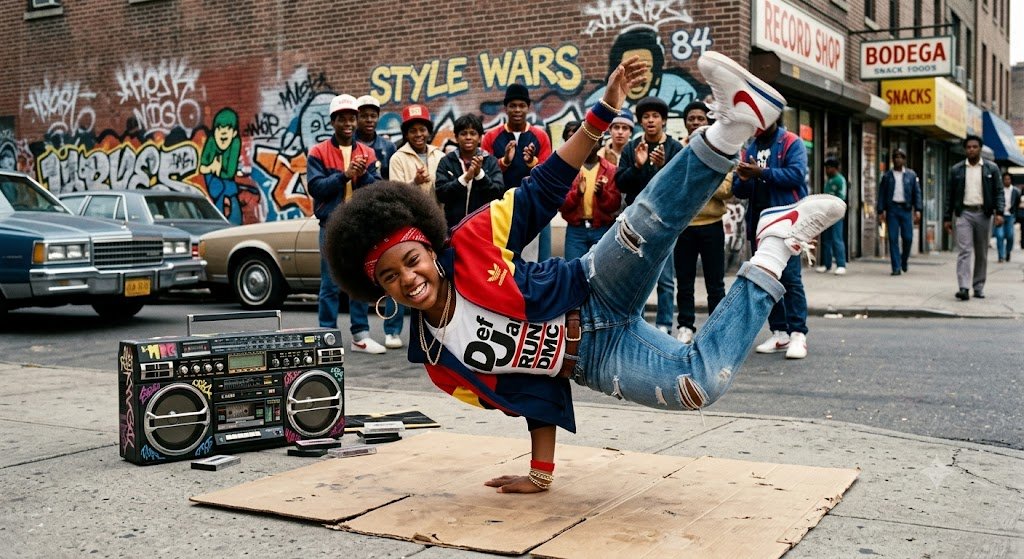
4. Street Corners and Parks Were Dance Arenas
You didn’t need a VIP pass or a lot of money to experience the exploding music scene. Street corners, community centers, and parks became hubs for collective energy:
-
Throwing down a piece of cardboard on the sidewalk for breakdancing battles.
-
Blasting music from a heavy, battery-powered boombox.
-
Creating a culture built entirely on resourcefulness and community gathering.
5. We Had “Third Places” That Didn’t Chase Us Away
In the 1980s, young people had access to spaces outside of home and school where they could just exist without being constantly tracked, monitored, or forced to spend money. Malls, arcades, parks, and front porches were safe zones where we were allowed to grow up together.
6. Joy Was a Act of Resilience
We didn’t just have fun for the sake of it; having fun was how we counteracted the hardships coming against us. Today, gun violence and a lack of funding have interfered with these outdoor spaces. To bring this kind of youth safety back, our political leaders need to invest in:
-
Free or low-cost activities and youth programs.
-
Safe transportation to and from these events.
-
Paid, trained community staff and security who focus on de-escalation, keeping physical violence entirely off the table.
A Note for Younger Readers: If you only get your history from true-crime shows and Hollywood movies, you are only seeing the extreme, sensationalized side of the past. Crisis and crime sold tickets back then too.
If you want the real story of the 1980s, look at old family photo albums, listen to the music of the era, and talk to the people who were there. You will find a history built on collective joy, creativity, and the enduring beauty of real human connection.
Affirmations Inspired by the Collective Joy of the 1980s
Repeat these to anchor your mind in presence, creativity, and real-world connection.
-
My joy is an act of resilience. I choose to find and protect my happiness, no matter what is happening in the world around me.
-
I am worthy of slow, meaningful connections. I do not need to rush my relationships or rely on a screen to feel seen.
-
My worth is not measured by an algorithm. I am grounded in the physical world, and my energy is valuable just as it is.
-
I create safe, welcoming spaces for myself and others. I honor the power of community and look out for those around me.
-
I give myself permission to disconnect from the noise. I choose tactile, offline moments that bring peace to my mind.
-
My creativity does not require perfection, only presence. I find joy in the process of making things with my own hands.