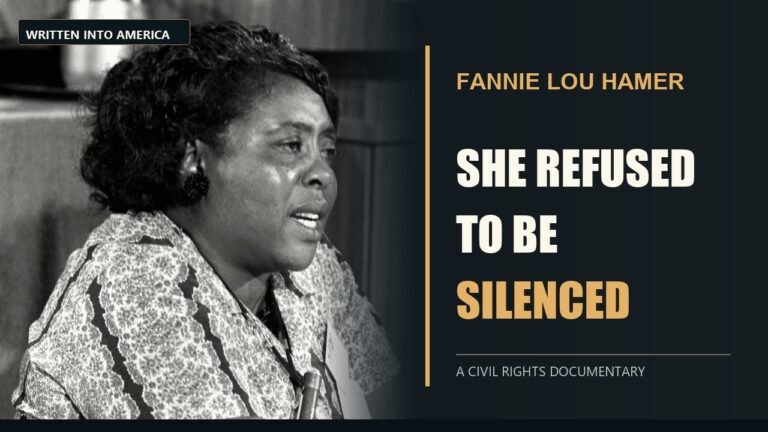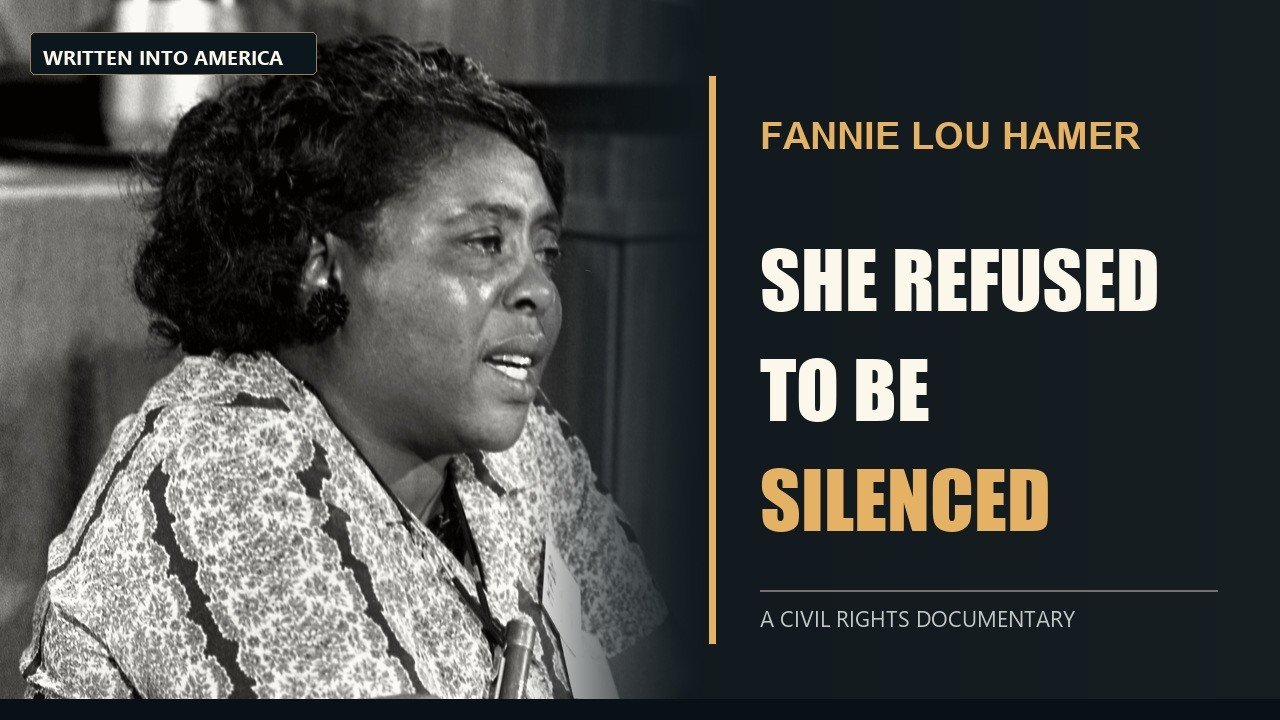
Fannie Lou Hamer, the courage to tell the truth, and what Survivors can learn from a woman who refused to disappear.
Some people will go to extraordinary lengths to keep a woman from being heard. They will question her character, challenge her memory, interrupt her, or suggest that she is making everybody uncomfortable.
And sometimes, when they cannot change what she knows, they try to change who gets to hear it.
Fannie Lou Hamer understood something about that.
In August 1964, she traveled to Atlantic City, New Jersey, with the Mississippi Freedom Democratic Party. She was there to challenge the exclusion of Black voters from Mississippi’s political process and to testify before the credentials committee at the Democratic National Convention.
She was a Black woman from Mississippi who had already paid dearly for exercising her rights. And she had something to say.
1. She Had Lived the Violence She Was Describing
Fannie Lou Hamer was born in 1917 in Montgomery County, Mississippi. She grew up working in the cotton fields and eventually became a sharecropper and timekeeper on a plantation.
In 1962, at age 44, she attempted to register to vote. The plantation owner demanded that she withdraw her registration effort or leave. Hamer refused and lost her home and employment.
The following year, after attending a voter registration workshop, Hamer and other civil rights workers were arrested in Winona, Mississippi.
While in jail, she was brutally beaten by two incarcerated Black men acting under the orders of white law enforcement officers. The injuries affected her health for the rest of her life.
When Hamer later described that violence, she was not repeating something she had read. She was telling people what had happened to her.
And she knew that telling the truth could bring more trouble.
2. Then Came the Day America Was Supposed to Hear Her
On August 22, 1964, Hamer testified before the Democratic National Convention’s credentials committee.
She described the obstacles Black Mississippians faced when attempting to vote. She told the committee about her arrest and beating. She explained what it meant to live in a place where demanding ordinary citizenship could cost a person employment, housing, physical safety, and sometimes life itself.
President Lyndon B. Johnson, concerned about the political consequences of the Mississippi Freedom Democratic Party’s challenge, called an unscheduled press conference while the testimony was being televised.
The networks interrupted their coverage to carry the president.
Imagine that. A woman was describing violence and intimidation used to deny American citizens their rights, and the president’s appearance drew national television attention away from her testimony.
But the story did not end there.
3. Her Words Reached the Country Anyway
The interruption did not bury Fannie Lou Hamer’s testimony.
Television networks subsequently aired her remarks, allowing audiences across the country to hear what she had described.
She spoke about being arrested, beaten, and terrorized because she wanted the rights promised to American citizens.
Her testimony ended with a question that exposed the distance between America’s democratic ideals and the reality Black Americans were living.
Hamer was not asking the country to feel sorry for her. She was asking the country to account for what it was allowing.
That distinction is worth remembering.
A woman telling the truth about harm is not necessarily asking to become the center of attention. Sometimes she is asking why the harm was permitted in the first place.
4. Being Heard Did Not Mean She Received Everything She Demanded
There is something else we should remember about that convention.
The Mississippi Freedom Democratic Party did not receive the full recognition it sought. Party leaders proposed a compromise offering two at-large seats, which Hamer and her colleagues rejected.
The convention did not give them the victory they had come to secure.
This is important because we sometimes tell stories about courageous women as though speaking up guarantees a fair outcome.
It does not.
A woman can tell the truth beautifully, clearly, and courageously and still encounter institutions unwilling to do what justice requires.
That does not make her testimony a failure.
Fannie Lou Hamer continued organizing for voting rights, political representation, and economic opportunity. Her work was much larger than one speech, and her legacy cannot be measured by what happened in one convention hall.
5. Survivors Know Something About the Cost of Speaking
There are Survivors who recognize this pattern immediately.
You finally tell somebody what happened, and the conversation turns toward the person who harmed you. People worry about his reputation, his employment, his future, or the discomfort your disclosure might create.
Meanwhile, the original harm begins disappearing from the conversation.
Some Survivors have experienced this in families. Others have encountered it in churches, schools, workplaces, or institutions responsible for protecting them.
The circumstances are not identical to Hamer’s fight against racial disenfranchisement. But her story offers a lesson about the difference between allowing someone to speak and being willing to confront what her words reveal.
Listening is not simply permitting testimony. It is being willing to examine the truth that testimony brings into the room.
6. You Do Not Have to Keep Explaining Yourself to People Committed to Looking Away
Fannie Lou Hamer’s example is not an instruction for every Survivor to speak publicly.
She was an organizer pursuing a political mission, and she made choices in circumstances particular to her life.
Your circumstances may require privacy. Your safety may depend on careful decisions about whom you trust and what you disclose.
You can honor courageous women without being required to repeat their risks.
And you can recognize something valuable in their lives: other people’s unwillingness to hear the truth does not make the truth less worthy of attention.
You do not have to turn every conversation into another opportunity for somebody to dismiss your experience.
You are allowed to protect your peace while continuing to respect what you know.
7. The Woman They Tried to Interrupt Is Still Teaching Us
More than sixty years later, people continue listening to Fannie Lou Hamer’s testimony.
They study her words. They teach her history. They remember the woman who stood before powerful people and described what had happened to her and her community.
The interruption is now part of the story, but it is not the most important part.
Her courage is.
Her knowledge is.
Her determination to make the country confront the experiences of Black Mississippians is.
And perhaps that is one of the most beautiful lessons we can carry from her life.
People may try to decide when your words deserve attention. They do not get to decide whether your life has meaning.
Fannie Lou Hamer did not wait for the powerful to become comfortable with her testimony.
She had work to do.
And she did it.
An Affirmation to Carry With You
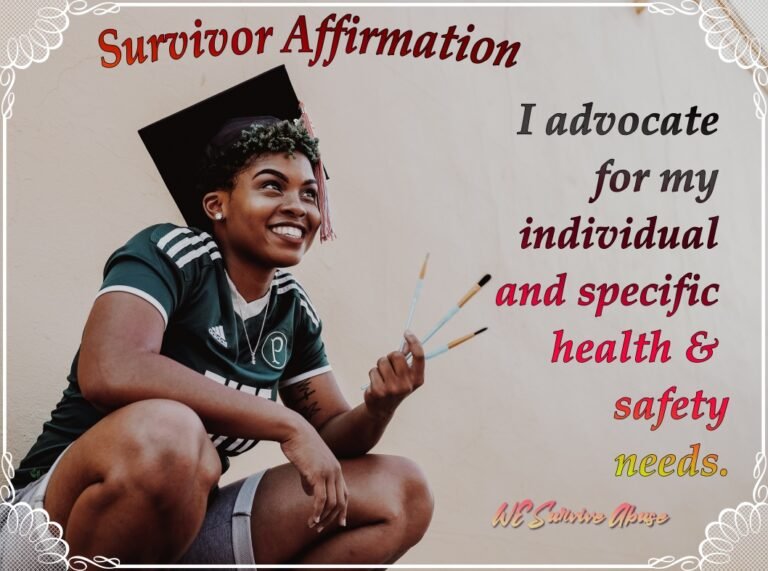
My truth does not become less valuable when somebody interrupts me. I am allowed to choose when, where, and with whom I share my experiences. I can honor my voice without sacrificing my safety. And I can remember the women before me who made room for voices like mine.
Sources and related reading
For the published article, I would add these verified historical sources beneath the story:
-
Smithsonian: How Fannie Lou Hamer Challenged a Nation.

National Museum of African American History
https://www.youtube.com/watch?v=8Z8DWFtR_Yc