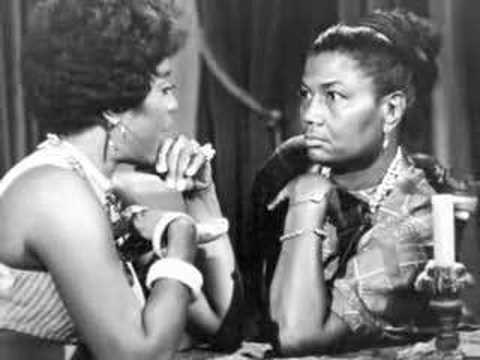
Ketty Lester deserves more than a passing mention. She deserves the kind of appreciation that slows the room down. Born Revoyda Frierson in Hope, Ark
Ketty Lester deserves more than a passing mention. She deserves the kind of appreciation that slows the room down.
Born Revoyda Frierson in Hope, Arkansas, she came from a farming family and grew into a singer and actress whose career crossed music, theater, film, daytime television, and prime-time television. Her voice carried her first. Her presence carried her further. And for many people, her name may not arrive first, but her work has already been in the room.
Some remember her through “Love Letters,” the song that became her great 1962 hit. It reached the top five in both the United States and the United Kingdom, and her album later received a Grammy nomination. Others remember her as Hester-Sue Terhune on Little House on the Prairie, where she brought dignity, humor, moral clarity, and a steady Black woman’s presence into a series where Black characters were rare.
We loved her so much. She was the anchor on that show that we did not know we needed. The voice. The beauty. The wisdom. We were there for it every week. (My heart still remembers the love story because it was so beautiful and so beautifully executed. Of course, me as a kid had no idea I was watching someone masterfully gifted at singing and performing Grammy-nominated love songs. LOL.)
Still, I’m Gen X. The previous generations knew and loved her art long before I was a thought.
Others know her from film and television roles across decades, including Blacula, Days of Our Lives, Julia, Sanford and Son, Uptown Saturday Night, and House Party 3.
But Ketty Lester’s story is not only about performance. It is about doors.
Some biographical sources credit her with historic firsts, including being the first African American woman to appear in the Ziegfeld Follies, and note her importance in daytime television history. Other reporting places her within another important milestone: her role in daytime television helped mark the first time a Black couple with two children appeared as regular characters in that genre.
And here is where we have to be honest.
When we say someone was “the first,” we are not saying they were the first person with talent. We are not saying nobody before them could sing, act, dance, write, study, lead, or command a room.
Often, “first” means the first person a gate finally opened for.
“First” can mean others were ignored.
“First” can mean others were blocked.
“First” can mean the archive is incomplete.
First can mean the system finally allowed one person through after denying many others the chance to even stand at the door.
That is why appreciation matters. Not empty flattery. Not shallow nostalgia. Real acknowledgement.
When people step into an art form, a tradition, a genre, a style, a dance, a sound, or a storytelling lane, they inherit more than technique. They inherit a road. Somebody cleared brush. Somebody took insults.
Somebody was told they were “too much,” “not enough,” “too Black,” “too plain,” “too elegant,” “too country,” “too difficult,” “too early,” or “not what audiences want.”
Ketty Lester’s career teaches us that recognition is not just about fame. It is about memory. It is about naming the people whose work made later work easier to imagine.
If artists, creators, producers, writers, performers, and fans want to avoid conflict later, this is one of the ways: learn the lineage before claiming the language. Study the pioneers before borrowing the style. Say the names before acting as if the form appeared out of nowhere. Acknowledge, teach, and share what you have learned everywhere.
People tend to notice and remember when you do not acknowledge the bricks that support the floor you are standing on.
Gratitude is not weakness. Gratitude is cultural intelligence.
Acknowledgement is not a burden. It is how we keep the floor from cracking beneath us.
Ketty Lester’s life reminds us that a woman can be a singer, actress, stage performer, television presence, gospel artist, memoirist, and elder of the craft all in one lifetime. She was inducted into the Arkansas Black Hall of Fame in 2022, a fitting honor for a woman whose work traveled far beyond Arkansas while still carrying the weight of where she came from.
So today, we honor Ketty Lester.
We honor the voice.
We honor the roles.
We honor the firsts.
We honor the doors she walked through.
And we also honor the unnamed people who were denied those doors before her.
Because real appreciation does not only clap for the person onstage.
It remembers who built the stage, who was kept off it, and who made it possible for somebody else to stand there later without having to fight quite as hard.